

It’s a peculiar form of civic performance art, a macabre ballet performed to the soundtrack of sirens and the rhythm of a scanner app.
Every holiday weekend in Chicago, the choreography is the same: the flash of muzzle fire, the tragic headlines, the press conferences brimming with platitudes and a steadfast refusal to acknowledge the elephant in the room, now so large it’s practically redecorating the room with its trunk.
Over the recent long weekend, the Windy City did not deviate from its gruesome script. Dozens were shot. Lives were extinguished, futures stolen in bursts of senseless violence. To call it a tragedy implies it’s an aberration, a freak occurrence. It is not. It is a feature, not a bug, of a system meticulously engineered by ideological zealots who prioritize political purity over public safety.
The immediate, Pavlovian response from the city’s leadership is a masterclass in misdirection. They’ll blame the heat, the guns (inanimate objects famously known for their agency and moral compass), systemic racism (a very real and pervasive issue, but not the sole culprit for a specific weekend’s bloodshed), and a lack of summer jobs programs. They will blame everything and everyone except the one variable they have direct control over: their own catastrophic policy decisions.
This isn’t a new phenomenon.
Chicago’s relationship with violence and political failure stretches back decades, long before the current crop of activists-turned-politicians decided to experiment on a metropolis of 2.7 million people. The city has been a case study in one-party rule for generations. The Democratic machine, for all its purported compassion, has overseen the creation of crushing poverty, failing schools, and economic deserts in entire neighborhoods. They created the tinderbox. Their recent policies are the match.
The “Defund the Police” movement, though some now cowardly distance themselves from the slogan while still embracing its ethos, was never about thoughtful reform. It was a moral purge, a performative act of self-flagellation aimed at appeasing the loudest voices on Twitter. It was implemented with the foresight of a lemming navigation committee. They slashed police budgets, demoralized officers with rhetoric painting them as an occupying army, and instituted policies that made proactive policing a professional liability.
And then they seemed genuinely surprised when crime went up. It’s like draining the oil from your car’s engine, revving it to redline, and then expressing shock when it seizes up. The only thing more astonishing than the failure itself is the unwavering commitment to the cause of that failure.
This brings us to a recent, almost Shakespearean display of this willful blindness.
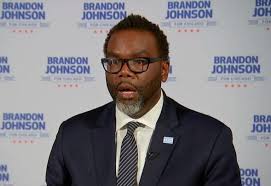
On Morning Joe, a show not exactly known as a bastion of law-and-order conservatism, host Joe Scarborough engaged in a painfully simple exercise. He attempted to lead Chicago Mayor Brandon Johnson to a conclusion so obvious it’s taught to toddlers: more of something you want generally gets you more of that thing.
Scarborough, playing the role of a exasperated Socrates, asked a simple question. Not about the nuances of qualified immunity. Not about the intricacies of community relations. He asked if the mayor believed that adding more law enforcement personnel would result in less crime.
It’s a question with a binary answer. “Yes” or “No.” It is the political equivalent of a slow-pitch softball, grooved right over the plate. A competent politician, even one ideologically opposed to the police, would smack this question out of the park with a facile, “Yes, but we need the right kind of cops, trained in de-escalation, integrated into the community…” and then pivot to their talking points.
But Johnson, a true believer in the faith of failure, didn’t just miss the ball. He swung three times and fouled off his own head.
Morning Joe tries to get Chicago Mayor Brandon Johnson to simply answer one question..will more cops help crime…this is laughable. pic.twitter.com/c9BRhr8JfD
— Dan Mandis (@DanMandisShow) August 27, 2025
In case you missed it, three times Scarborough asked a question that is an easy, “Yes” answer.
“Do you think adding more law enforcement would result in less crime?”
Duh. Of course it would. Regardless of what you think about police, this is an easy question to answer. It’s like asking, “If I give you a million dollars tax-free, would this make you a millionaire?
But three times Scarborough asked the obvious question, clearly leading Johnson to the right answer. And three times the idiot mayor of Chicago didn’t even see the pitch.
How obtuse must you be to not see that Scarborough wasn’t asking a gotcha question.
He even said multiple times, “I agree with you” on the other BS social issues regarding policing. Still Johnson didn’t have the intellect to help his party and himself out by answering, “Yes. More cops would mean less crime.”
And the reason Johnson couldn’t answer the simple question is he’s anti-cop. For whatever reason. He resorted to some bogus stat, likely “validated” by the fake data academia has provide on Blacks in the criminal justice system, bolstered by the bogus FBI data.
The spectacle is breathtaking. It reveals a core truth of this modern progressive ideology: it is a closed logical loop.
Any data that contradicts the dogma must be fake. Any solution that predates the dogma must be rejected. The evidence of your own eyes—that visible police presence deters crime—is dismissed as a racist illusion. They have created a reality-distortion field so powerful that even a straightforward question from a friendly interlocutor cannot penetrate it.
This isn’t just about Chicago. It’s a blueprint for national failure. The hypocrisy is so pungent you can smell it from coast to coast. These are the same politicians who, while advocating to defund the police for their constituents, often maintain—or even increase—private security details for themselves. The message is clear: the policies we champion for you aren’t good enough for us and our families.
The historical view is even more damning. The data on the correlation between police presence and crime reduction is not some right-wing fantasy; it’s criminological fact. The “broken windows” theory, for all its controversies and misapplications, was built on the basic premise that visible order maintenance prevents more serious crime. The great crime decline of the 1990s, while multifaceted, was undeniably linked to increased and smarter policing strategies. To dismiss this entire body of evidence because it doesn’t align with a 2020 activist slogan is the height of intellectual arrogance.
So what’s the endgame of this defunded dance?
As the city’s leadership pirouettes away from reality, the citizens are left paying the price. And into this vacuum of competence steps a stark alternative: the specter of federal force. The threat of National Guard deployment is portrayed as a draconian measure, but when local authority has utterly abdicated its most basic responsibility—to protect its citizens—it becomes a logical, if grim, proposition.
The ultimate irony, the grand punchline to this devastating joke, is that the very policies designed to stick it to a former president and his supporters may be the very thing that delivers those same urban communities to him. People just want to be safe. They want to sit on their porch on a summer night without fear. It’s not a lot to ask. When one party offers them abstract theories on systemic oppression and the other offers to simply make the shooting stop, the choice for a desperate parent isn’t difficult.
They’ve been offered the defunded dance, and they’ve seen where it leads. Now they just want a beat cop.