
The head coach at one of America’s bluest-blood football programs, fresh off leading his team through a couple of seasons, gets the boot not for losing games, but for dipping his pen in company ink.
Fair enough—universities have these pesky “ethics clauses” in those multimillion-dollar contracts for a reason. But then, hours later, the same guy allegedly barges into the woman’s home, grabs knives from her kitchen, waves them around while threatening self-harm, all after months of what police call stalking.
Wait, there’s more.
He’s a married dad of three, mind you, and the whole mess ends with him in cuffs. He’s charged with felony home invasion and misdemeanors that could land him behind bars.
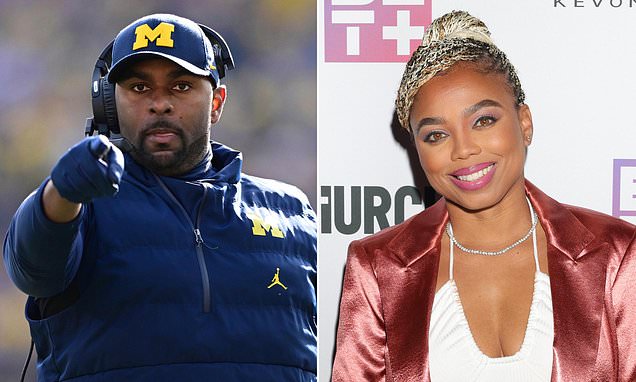
Now, if you’re a normal human with a functioning moral compass, your reaction might be: “Yikes, that’s a spectacular implosion. Good riddance—protect the program, protect the victims.” But if you’re Jemele Hill, Atlantic contributor and professional outrage merchant, your takeaway is… racism.
Yes, somehow, this knife-flavored domestic violence nightmare is just another chapter in the endless saga of Black coaches getting railroaded while white ones skate free.
Hill took to social media faster than a politician spotting a camera.
She declared that we shouldn’t lump Sherrone Moore’s firing in with Mel Tucker’s or Ime Udoka’s as some “indictment of Black male coaches.” To prove her point, she rattled off names like Hugh Freeze, Bobby Petrino, Rick Pitino, and Mike Price—white coaches who survived (or bounced back from) their own scandals.
I ask, “Does anybody believe that a Division 1 sports program would have treated any non-Black coach differently?”
First off, nobody—literally nobody outside the echo chambers of perpetual victimhood—is painting Moore’s firing as an “indictment of Black male coaches.” The indictment here is of one specific coach who allegedly turned into a walking Lifetime movie villain after getting caught cheating on his wife with a staffer. The university fired him for the affair, sure. But the arrest for home invasion and stalking? That’s the cherry on top that makes any comeback fantasy evaporate quicker than dew on a Phoenix sidewalk.
And those white coaches Hill parades as exhibits in her racism trial? Let’s give them the fair hearing she demands, shall we?
Hugh Freeze? The man who got run out of Ole Miss after a “pattern of conduct” involving calls to escort services on his school phone—on top of presiding over a recruiting violation dumpster fire. He didn’t get a soft landing at another Power Five gig right away; he detoxed at Liberty for years before Auburn threw him a lifeline. Scandal? Yes. Immediate redemption? Hardly.
Bobby Petrino? Crashed his motorcycle with his mistress aboard, lied about it, gave her a cushy job and a $20,000 “gift” from program funds. Arkansas canned him on the spot, no severance parachute. He bounced around the wilderness—Western Kentucky, Louisville again—before landing back in Fayetteville as an offensive coordinator, not head honcho. Took over a decade to crawl back.
Rick Pitino? Sex in a restaurant with a stranger who later tried extortion, followed by the stripper-party scandal in player dorms that vacated a national title, capped by the FBI’s Adidas payola probe. Louisville fired him, stripped banners, and he’s been coaching in Greece and at mid-majors ever since. Hall of Fame resume, sure, but no blue-blood throne waiting.
Mike Price? Fired by Alabama before coaching a single game after a strip-club escapade involving thousands in cash raining on dancers. Career detour to UTEP.
See the pattern? These guys didn’t “skate.” They paid heavy prices—lost jobs, lost money, lost prestige, spent years in coaching purgatory. Some clawed back because, well, winning cures a multitude of sins in this racket. But none got a gentle pat on the wrist and a “boys will be boys” pass.
Now contrast with Moore
He has an affair with a subordinate (clear policy violation), followed by alleged stalking and knife threats that scream danger, not just dalliance. Did any of Hill’s white examples involve breaking into homes and terrorizing women with blades? No? Funny, that. On the sliding scale of screw-ups, “cheating and lying” sits way below “potential violent felony.” Yet Hill equates them because… skin tone.
This is the hypocrisy that makes your eyes roll so hard they risk permanent orbit. The left loves to lecture about believing women, protecting victims, zero tolerance for abuse—until the perpetrator fits a preferred narrative. Then suddenly it’s “wait, consider the broader context of race!” As if wielding kitchen knives in a former lover’s home is just cultural expression.
And let’s not ignore the elephant in the room: Moore was Michigan’s first Black head football coach, a historic hire after Jim Harbaugh bolted. The university bent over backward to elevate him, handing the keys to one of college football’s crown jewels. If systemic racism was lurking, it sure took a nap during that promotion.
No, what we have here is classic ethnocentric blindness—the kind that sees race in every shadow, even when the spotlight reveals plain old bad behavior.
It’s the same reflex that turns personal failures into collective grievances, shielding individuals from accountability by wrapping them in the cloak of oppression. Moore’s actions endangered people; crying racism doesn’t erase that. It just cheapens real discrimination while excusing the inexcusable.
College football is a merciless arena. Coaches of every hue get hired for winning and fired for losing—or for blowing up their lives in spectacular fashion. Data backs this up: head coaching turnover averages around 20-25 per year across FBS, triggered by everything from sub-.500 records to off-field embarrassments. Black coaches face hurdles in getting those top jobs—fewer than 10% in Power conferences—but once in the chair, the axe falls for the same reasons it does on anyone: violate ethics clauses, embarrass the brand, risk lawsuits.
Moore violated his in neon lights. Michigan acted swiftly, as any institution should when “credible evidence” of an improper relationship surfaces—especially one escalating to police involvement. Blaming race isn’t insightful; it’s lazy. It’s the comedic equivalent of blaming gravity when you jump off a cliff.
In the end, this isn’t about Black coaches versus white ones.
It’s about one coach’s catastrophic choices versus the standards every program must uphold. Jemele Hill wants us to overlook the knives, the stalking, the betrayal of family and institution, all to score points in an imaginary oppression Olympics.
Sorry, but reality doesn’t deal in participation trophies. Sometimes a firing is just a firing—because stalking with a knife isn’t a “cultural misunderstanding.” It’s a crime. And pretending otherwise? That’s the real scandal.