

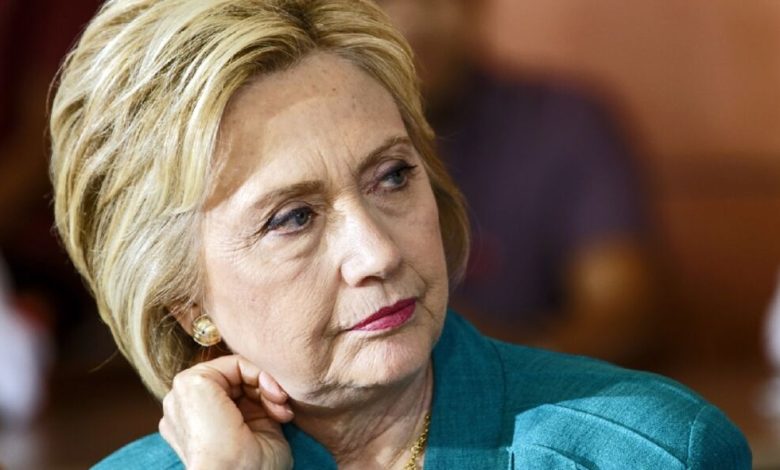
There is a particular look politicians get when the script flips on them, when the studio audience they imagined turns out to be a room full of people who read history instead of hashtags.
It is the expression of someone who showed up for a late-night monologue and wandered into a geopolitical cross-examination. At the 2023 Munich Security Conference, that look found a home on the face of Hillary Clinton.
Hillary unhinged on the world stage!
Czech Foreign Minister Petr Macinka triggered Hillary Clinton’s TDS. Clinton’s unhinged interruptions can’t be stopped until Macinka calmly explains that the truth makes her “nervous,” leaving Dems humiliated again. pic.twitter.com/Gxq5snMtIC— Tudor Dixon (@TudorDixon) February 15, 2026
Clinton, who has long delivered her worldview as though it were settled science rather than ideological fashion, appeared to assume that Europe remained the same pliable audience it had been during the Obama era. After all, for years America exported not merely products and pop culture but a full curriculum of progressive orthodoxy. Diversity seminars traveled faster than diplomats. Pronouns became more binding than treaties. Borders, once lines on maps, were treated like outdated suggestions.
But the world, inconveniently, changed.
Enter Petr Macinka, Czech Deputy Prime Minister, who did not arrive in Munich to sip sparkling water and nod along to recycled Davos platitudes. He arrived armed with something that has become unexpectedly controversial in elite circles: national sovereignty. As captured in a widely circulated clip shared by Tudor Dixon on X, Macinka calmly dismantled Clinton’s assumptions while defending the idea that countries might prefer self-determination over imported ideology.
What unfolded was less a debate and more a collision between two eras. Clinton leaned into the familiar refuge of progressive talking points, invoking women’s rights as though she were still campaigning against a Republican Senate in 1998. Yet the irony, shimmering like heat off pavement, was impossible to ignore. In attempting to assert moral authority, she repeatedly interrupted Macinka, who was articulating his nation’s perspective. The optics were exquisite. The apostle of inclusion bulldozing a smaller nation’s representative in the name of enlightenment.
Macinka, with a composure that suggested he had practiced this moment in front of a mirror labeled “Post-American Leftism,” suggested Clinton might be uncomfortable hearing what he was saying. It was the sort of understated jab that lands harder than a shouted insult. Clinton pushed back, though the exchange left her looking less like a stateswoman and more like a pundit who had misread the room.
For decades, America exported many things with astonishing efficiency:
Hollywood fantasies, Silicon Valley algorithms, and, increasingly, social experiments. Under progressive leadership, those exports expanded to include climate maximalism that treated fossil fuels as original sin, gender ideology that untethered language from biology, and border policies that made sovereignty sound provincial. This was not merely foreign policy; it was cultural franchising.
The irony is that America, once defined by rugged self-determination, began selling a brand of globalism that diluted the very concept of nationhood. During Clinton’s tenure as Secretary of State, the United States championed multilateralism with missionary zeal, often elevating international consensus above American interests. The philosophy was clear: integration over independence, bureaucracy over borders.
Yet politics, like gravity, eventually asserts itself.
With the election of Donald Trump, the export model shifted. Trump’s agenda, whatever one thinks of its aesthetics, re-centered the conversation on sovereignty, national pride, and reciprocal trade. “America First” was less a slogan than a reminder that countries are supposed to act in their own interests. The effect rippled outward. Nations long pressured to conform to progressive orthodoxy began reexamining whether they had signed up for partnership or ideological supervision.
In that context, Macinka’s remarks were not an anomaly but a signal flare. Eastern Europe, shaped by decades of Soviet domination, understands the cost of surrendering sovereignty to distant elites. When Clinton framed progressive social policy as universal virtue, Macinka heard something else: the familiar hum of centralized authority wrapped in moral language.
Clinton’s rhetorical fallback to women’s rights, while emotionally potent, felt curiously disconnected from the specifics of the exchange. It was as if she reached for a well-worn key only to discover the lock had been replaced. The problem was not that women’s rights lack importance; it was that invoking them as a conversational trump card, particularly while cutting off a foreign leader mid-sentence, underscored the performative aspect of modern progressive politics. Grievance, polished and packaged, has been a reliable currency on the Left. But in Munich, the exchange rate seemed to falter.
The broader significance lies in what this moment represents. For years, global conferences functioned as echo chambers where Western elites affirmed one another’s virtue. Climate targets were announced with theatrical urgency. Gender frameworks were expanded until language itself required footnotes. Open-border sympathies were expressed by officials protected by layers of security. Dissent, when it surfaced, was treated as ignorance rather than disagreement.
Now, however, the applause lines are less dependable.
Countries are rediscovering cultural confidence. They are asking whether adopting every American social trend is a prerequisite for partnership. They are weighing energy independence against climate alarmism, border security against humanitarian abstractions, and national identity against global homogeneity. In that environment, Clinton’s worldview appears less like settled doctrine and more like a relic from a particularly self-assured decade.
There is something almost Shakespearean about watching a political titan confront irrelevance. Clinton has occupied the apex of American power structures: First Lady, Senator, Secretary of State, presidential nominee. Her political persona was built on inevitability. Yet inevitability, as 2016 demonstrated with brutal clarity, is a fragile illusion. When Macinka challenged her assumptions, he was not merely debating policy. He was contesting the premise that progressive ideology is history’s final chapter.
It is tempting to view this episode as a minor skirmish in a crowded news cycle. That would be a mistake. Symbols matter. The image of a former American Secretary of State being publicly rebuked by a Central European official for lecturing on social orthodoxy encapsulates a broader shift. The cultural export pipeline is being renegotiated.
Under Trump’s renewed leadership, the United States has recalibrated its message.
Climate commitments have been revisited with an eye toward economic reality. Gender policy has been reframed around biological definitions. Border enforcement has been restored as a matter of national survival rather than xenophobic paranoia. Whether critics approve is secondary to the fact that other nations are watching and, in some cases, emulating.
Clinton, accustomed to a world in which progressive assumptions went largely unchallenged on international stages, seemed genuinely surprised by the resistance. The befuddlement was telling. It suggested a political class that mistook dominance for permanence. But history is littered with movements that believed themselves irreversible.
Perhaps the most striking aspect of the Munich exchange is its civility. There were no raised fists, no theatrical walkouts. Just a firm defense of sovereignty and a reminder that ideological exports are optional. In that calm refusal lies a quiet revolution.
Sanity, once dismissed as provincial, is reentering the conversation. Countries are rediscovering pride in their cultures, their traditions, their right to define themselves without imported scolding. American exceptionalism, when rooted in strength rather than self-reproach, becomes aspirational again. It invites imitation not because it demands conformity, but because it models confidence.
Clinton’s moment in Munich may not dominate headlines for long, yet it serves as a snapshot of a changing world. The era when American elites could assume moral authority on every global stage is fading. In its place stands a more contested, more pluralistic landscape, where sovereignty is not a dirty word and where even political royalty can be told, politely, that the audience has evolved.
And somewhere in that evolution, applause has become optional.