
26History occasionally produces leaders who treat conflict with pure diplomacy. And there are others who treat conflict as diplomacy with consequences.
President Trump is obviously the latter.
Almost as a way to help the opposition have a fair shot, Trump occasionally telegraphs his intentions. When he does this, think of how a cobra fans its hood and you get the point. It’s a warning.
And when he gets past warnings, Trump acts. Decisively.
President Trump does not start fights designed to be managed. He starts fights he intends to conclude.
The recent joint U.S.–Israeli bombing campaign against Iran was not an isolated military action.
It was the continuation of a strategic arc years in the making, one rooted in a single premise: unfinished threats eventually return stronger, angrier, and more expensive.
And Iran, unmistakably, returned.
The Memory Problem
Iran’s leadership has long operated under a geopolitical assumption shared by many adversaries of the United States: American political cycles erase consequences.
Sanctions tighten. Elections happen. Pressure fades. Negotiations restart. The clock resets.
During Trump’s first presidency, Iran’s economy contracted sharply under sanctions pressure. A by-product was the currency collapse accelerated, and internal unrest simmered. When the political pendulum swung back in Washington due to the 2020 coup of Trump, Tehran regained breathing room. Under Captain Demento, Iran rebuilt networks and resumed nuclear development pathways.
But Trump accomplished the impossible. He got re-elected.
He recognized the damage done by Biden, and he got right to work. His efforts culminated in the strike on Iran’s nuclear facilities.
Intelligence disputes remain about how much damage strikes inflicted. Nevertheless, Pentagon assessments suggested earlier attacks degraded Iran’s nuclear program by roughly one to two years rather than permanently destroying it.
From Tehran’s perspective, survival equaled victory. From Trump’s perspective, survival meant the job was unfinished.
The Return of Deterrence
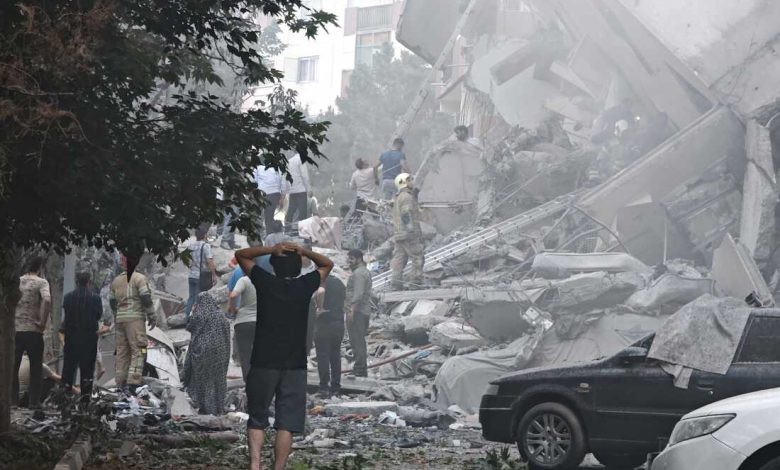
The February 2026 operation, conducted jointly with Israel and widely reported as one of the largest coordinated strike packages in modern Middle Eastern history, targeted nuclear facilities, military infrastructure, and senior regime leadership simultaneously.
This was not symbolic bombing. It was systems targeting meant to wipe out Iranian leadership.
Reports describe hundreds of targets struck in a synchronized assault designed to collapse command capability alongside nuclear capacity.
The distinction matters.
Traditional American interventions often attempted limited punishment while preserving escalation control. This operation appears structured around escalation dominance: overwhelming force early enough to prevent prolonged war.
Trump’s public message reinforced that interpretation. In a direct address, he warned Iranian military and security forces to surrender or face “certain death,” offering immunity to those who stood down.
That statement was not rhetorical flourish. It was psychological warfare aimed at regime fracture.
The Warning That Changed the Equation
Military analysts tend to focus on bombs and hardware. Strategists focus on incentives.
Trump’s ultimatum targeted Iran’s most critical vulnerability: loyalty inside its coercive apparatus.
By separating the regime from its military rank-and-file, the message reframed the conflict from nation versus nation into regime versus survival.
The implication was unmistakable: This is not merely about nuclear facilities, but instead about whether the Islamic Republic itself continues to exist.
Encouraging internal collapse while applying external military pressure mirrors historical regime-change doctrines rarely stated openly by American presidents.
This time, it was stated openly.
Months in the Making
Contrary to claims that the attack emerged suddenly, evidence indicates a prolonged military buildup throughout early 2026, including carrier strike groups, missile defenses, and expanded regional deployments.
That posture suggests preparation for sustained operations rather than a single punitive strike.
Diplomatic negotiations continued publicly even as military positioning intensified, creating strategic ambiguity about American intentions.
Critics interpret this as deception. However, most view the tactics as leverage.
Either way, the operational timeline shows planning measured in months, not days.
Israel’s Role and the Intelligence Dimension
Close coordination with Israel was inevitable. For decades, Israeli intelligence assessed Iran’s nuclear program as an existential threat.
The joint operation reflects deep integration between U.S. forces and the Israel Defense Forces, supported by Israeli intelligence capabilities widely regarded as among the most aggressive and sophisticated in the world.
Israeli doctrine favors preemption over deterrence when existential risks emerge. American doctrine traditionally hesitates. In this operation, the team converged.
The result is a hybrid strategy: American scale paired with Israeli precision intelligence.
Venezuela as Blueprint
In Venezuela, American pressure did not rely solely on invasion. Instead, it combined economic strangulation, diplomatic isolation, psychological pressure, intelligence penetration, and selective demonstrations of overwhelming force.
The goal was not immediate conquest but regime exhaustion.
Applying that framework to Iran produces a recognizable pattern:
-
Economic collapse through sanctions pressure.
-
Internal unrest fueled by domestic grievances.
-
Delegitimization of ruling elites.
-
Military demonstrations designed to fracture loyalty structures.
-
External backing for internal political realignment.
Iran’s recent nationwide protests, some of the largest since 1979, already exposed deep instability within the regime.
Military strikes layered atop domestic unrest create compound pressure few authoritarian systems withstand indefinitely.
The Global Reaction
International reaction split predictably.
European leaders condemned the escalation and urged diplomacy. Russia warned the strikes risked broader regional catastrophe.
Yet geopolitical condemnation often signals disruption of existing power balances rather than strategic failure.
Oil markets reacted immediately. Regional retaliation followed through missile and drone launches targeting Israel and U.S. positions.
This response was expected. In many ways, it validated the premise driving the strike: Iran retains offensive capability and willingness to use it.
Almost all the Iranian missiles were shot down. The few that landed created real problems for Iran in the region, as they bombed their Arab neighbors.
The Strategic Logic: Finish the Problem
Trump’s foreign policy pattern has remained unusually consistent across administrations:
Escalate quickly.
Create asymmetry.
Force a binary outcome.
Supporters describe it as strength. Critics describe it as risk tolerance bordering on recklessness.
Both descriptions may be true simultaneously. However, the doctrine underlying the Iran strike appears clear: deterrence fails when adversaries believe America lacks staying power.
The warning to Iran’s military signals an attempt to restore credibility through inevitability. Trump responded, to drive home the point. And now the rule is, “We will finish this.”
What Happens Next
If Venezuela truly serves as a blueprint, the coming phase will likely shift away from headline airstrikes toward systemic pressure:
• intensified economic isolation
• cyber operations
• intelligence-driven targeting
• encouragement of internal political fracture
• sustained psychological operations
Military action becomes background noise while political collapse becomes the objective.
As President Trump strongly suggested to the Iranian people, your time is now.
The Larger Question
The real debate is not whether Iran was damaged. Evidence suggests significant disruption to infrastructure and leadership networks already.
The question is whether the Islamic Republic can survive sustained multidimensional pressure from both outside and within.
This was not a warning shot. It was the opening move of an endgame.