One minute, we’re told there’s a path forward with Iran. Negotiations are happening, pressure is working, the chessboard looks…not peaceful, but at least organized.
Then suddenly, like someone kicked the table over mid-game, everything flips. Strait open. Strait closed. Deal on. Deal off. And right on cue, in walks Keir Starmer like a man announcing the weather after setting the storm himself.
Now, I’m with you on this. It’s not a lack of faith in Donald Trump. If anything, it’s the opposite. Trump’s consistency is the one fixed star in this whole cosmic circus. He has been crystal clear about Iran for years: no nukes, no funny business, and no more pretending that bad actors just need a group hug and a climate summit to behave.
But the rest of the world? That’s where things start to smell like a spy novel written by Captain Obvious.
Let’s rewind the tape for a second. Historically, Europe, particularly the power centers like United Kingdom, France, and Germany, have treated Iran less like a rogue regime and more like a complicated business partner who occasionally sets the office on fire. They’ve got trade interests, energy dependencies, and that ever-present desire to prove they can “lead” on the world stage without America.
So when Trump comes in, playing geopolitical hardball and actually getting results, it creates a problem. Not for Iran. For Europe.
Because imagine the headline: America forces Iran to heel. Alone.
That’s not just a policy outcome. That’s a branding disaster for a continent that has spent the better part of a decade trying to convince the world that America is the reckless one.
So what do you do?
Well… if you’re feeling particularly continental, you convene a meeting. Not one or two countries. No, no. Let’s get the whole ensemble cast together, like the geopolitical version of a group project where nobody did the reading but everyone wants credit.
Enter the EU emergency summit. Forty-nine countries, all suddenly very interested in “stability,” which is diplomatic code for “we’d like a piece of whatever win is about to happen.”
And right after that meeting? Boom. The deal “falls apart.”
Now, I’m not saying there’s coordination. I’m just saying if this were a movie, you’d lean over to the person next to you and whisper, “That guy definitely did it.”
Because here’s the part that doesn’t get enough attention: Iran didn’t suddenly gain leverage. If anything, they’ve been on the receiving end of sustained pressure, economically and strategically. Their options are shrinking faster than a wool sweater in a hot dryer. The idea that they woke up one morning and said, “You know what? Let’s walk away from negotiations while we’re weakened” doesn’t pass the laugh test.
Which brings us back to Starmer.
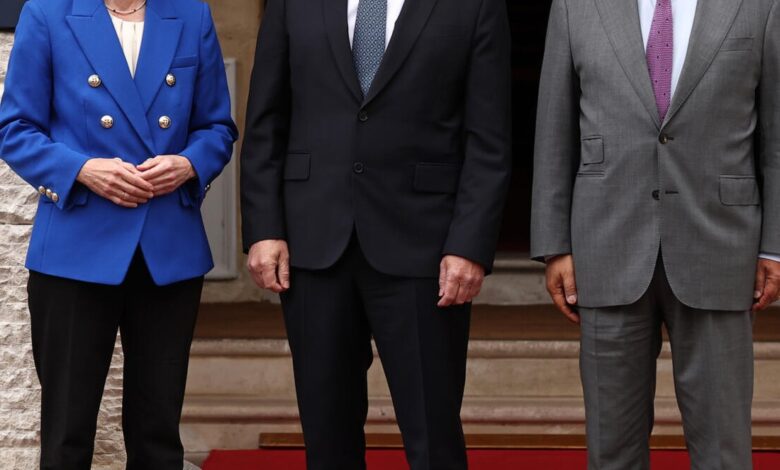
When Keir Starmer steps out after corralling a room full of EU leaders and essentially signals a shift, you have to ask: is this about peace…or positioning?
Because there’s a difference between helping broker a deal and trying to co-author the victory speech after someone else wrote the plan.
And Trump, for all the things people say about him, has one trait that drives the global elite absolutely up the wall: he doesn’t need their approval to win.
That’s the real tension here. It’s not just Iran. It’s not just the Strait. It’s the idea that America, under Trump, acts decisively and succeeds, while a lot of these international bodies are still workshopping their mission statements.
The EU would like the Strait to flip open and closed like a faulty garage door, because it causes confusion. And confusion creates leverage theater. Control the narrative, control the perception of control. If markets panic, if allies wobble, suddenly everyone’s looking for a “coalition solution,” which just happens to include the same players who were on the sidelines the whole game.
Iran’s strategic position hasn’t magically improved. They’re cornered, and they know it. The question isn’t whether they capitulate. It’s how, and who gets to stand at the podium when they do.