You want to predict the outcome of President Trump’s war with Iran? Or what about his next move on the economy? Then pay attention.
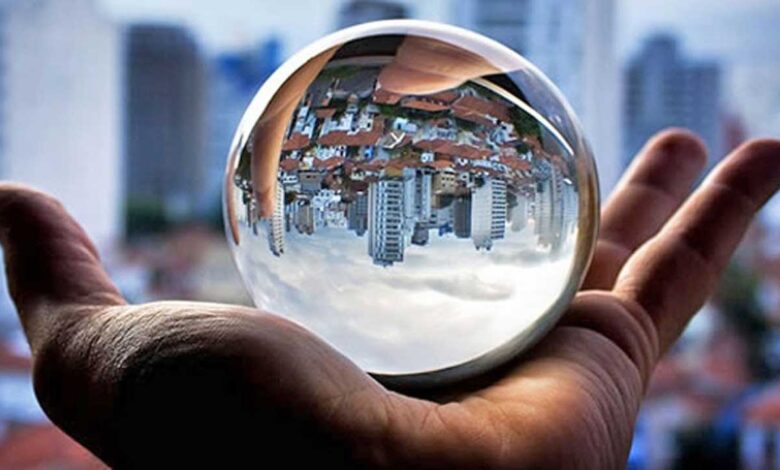
The future, for most people, is a fog machine set to maximum drama. Politicians pretend to see through it. Media figures squint into it. Meanwhile, your average “expert” treats forecasting like a Ouija board session sponsored by taxpayer dollars. Yet somewhere outside that circus, a man decided that guessing wasn’t good enough—and then proceeded to embarrass nearly everyone who ever claimed to know what comes next.
Ray Kurzweil didn’t just peek into the future. He reverse-engineered it.
Now, before anyone rolls their eyes and lumps him in with the usual Nostradamus knockoffs—those poetic fortune-cookie writers who speak in riddles so vague they could predict either a stock market crash or a particularly bad lunch—understand something critical: Kurzweil doesn’t deal in mysticism. No incense. No celestial alignments. No vague talk about “energies.” Just data, trends, and the one variable that never changes: human nature.
And that, ironically, is what makes him dangerous.
Because if the future can be predicted with a spreadsheet instead of a séance, then a lot of very powerful people lose their favorite excuse—“Nobody could have seen this coming.”
Except… someone did.
When Prediction Becomes Pattern Recognition
Long before Silicon Valley started congratulating itself for inventing the obvious, Kurzweil was laying out a framework that treated technological progress like a compounding force rather than a linear one. His premise wasn’t flashy. It didn’t need to be. Technology builds on itself. Each breakthrough accelerates the next. Layer human incentives on top of that—profit, convenience, power—and suddenly the “unknown” starts to look suspiciously predictable.
Back in 1990, in The Age of Intelligent Machines, Kurzweil made a series of predictions that, at the time, sounded like something between optimism and science fiction. Among them: the collapse of the Soviet Union under the pressure of emerging communication technologies. Not tanks. Not treaties. Not speeches. Cell phones and wireless communication.
At a moment when most geopolitical analysts were still debating ideology, Kurzweil looked at information flow and asked a simpler question: what happens when people can talk freely?
Turns out, regimes built on control don’t handle that very well.
That same book also predicted that computers would surpass the best human chess players by the year 2000. Fast forward to May 1997, and IBM’s Deep Blue didn’t just win—it dismantled Garry Kasparov, the reigning world champion, in a way that felt less like competition and more like a changing of the guard.
That wasn’t just a win for machines. It was a flashing neon sign: the curve of progress was steeper than most people realized.
The 86% That Should Make You Nervous
By 2010, Kurzweil’s body of predictions had been evaluated across multiple works, including The Age of Spiritual Machines and The Singularity Is Near. Out of 147 predictions, 115 were deemed entirely correct, 12 essentially correct, 17 partially correct, and just three outright wrong.
That’s an 86% success rate.
In any other field, that kind of accuracy would earn you a permanent seat at the table. In politics, it would qualify as sorcery. In media, it would probably get you labeled “problematic.”
Because here’s the uncomfortable truth: if someone can predict the future with that level of consistency, it means the chaos we’re constantly told is unavoidable… isn’t.
It means many of the “surprises” that hit society—economic collapses, technological disruptions, even geopolitical shifts—aren’t lightning bolts from nowhere. They’re the natural outcome of trends that anyone with the discipline to look could see forming years in advance.
And that raises a question nobody in power likes to answer: if the signs were there, why didn’t you act?
Why His Method Works (And Why Others Fail)
Unlike the modern prediction industry—which often feels like a blend of guesswork and narrative maintenance—Kurzweil’s approach is rooted in something refreshingly simple: incentives.
People act in their perceived self-interest. Always have. Always will.
Layer that over exponential technological growth, and you start to see patterns emerge. Businesses adopt innovations that increase efficiency or profit. Governments leverage technology to expand influence or control. Individuals gravitate toward convenience, even at the cost of privacy.
None of this requires psychic ability. It requires honesty.
Which is precisely why so many “experts” miss it.
Because honesty forces you to confront outcomes that may not align with your preferred narrative. It’s much easier to pretend the future is unpredictable than to admit it’s heading somewhere inconvenient.
Take artificial intelligence, for example. The conversation today is filled with equal parts awe and panic, as if this development arrived unannounced like a storm that skipped the forecast. Yet Kurzweil—and others paying attention—have been outlining this trajectory for decades.
The real shock isn’t that AI is advancing rapidly. The real shock is that so many people are pretending they didn’t see it coming.
The Media’s Favorite Trick: Pretend It’s Chaos
If there’s one institution that thrives on unpredictability, it’s the media. After all, a world that makes sense doesn’t generate panic clicks or endless panels of “breaking news” speculation.
So instead of acknowledging long-term trends, the narrative machine prefers to frame events as sudden, shocking, and inexplicable.
Economic downturn? Nobody could have predicted it.
Technological disruption? Came out of nowhere.
Global instability? Just one of those things.
Except, of course, it isn’t.
Kurzweil’s work—and the data-driven forecasting it represents—exposes a flaw in that entire model. If the future can be mapped with reasonable accuracy, then the constant state of surprise isn’t a feature of reality. It’s a feature of storytelling.
And storytelling, particularly when it intersects with politics, tends to have an agenda.
What This Means Moving Forward
So where does that leave us in 2026, standing at the intersection of rapid technological change, political volatility, and a culture that still treats foresight like a party trick?
It leaves us with a choice.
We can continue outsourcing our understanding of the future to institutions that benefit from keeping us in the dark, or we can start paying attention to the patterns that are already visible.
Kurzweil’s methodology offers a blueprint. Not a perfect one—no system is—but one grounded in reality rather than wishful thinking. It suggests that the future isn’t some distant, unknowable frontier. It’s a logical extension of what’s happening right now.
And if that’s true, then the question shifts from “What will happen?” to “Why didn’t we prepare?”
The Punchline Nobody Wants
Here’s the part where it all circles back, like a joke that lands a little too close to home.
The same people who dismiss predictive models when they’re inconvenient are often the first to claim expertise after the fact. They’ll tell you what went wrong, why it was inevitable, and how nobody could have stopped it.
Meanwhile, the receipts exist.
Kurzweil wrote his predictions down. Plain English or riddles. No escape hatches or poetic ambiguity. Just clear statements about what he believed would happen and why.
You can read them. You can evaluate them. You can compare them against reality.
Try doing that with most modern “experts.”
Final Thought: The Future Isn’t Magic
If there’s a lesson buried in all of this, it’s one that cuts through a lot of noise: the future doesn’t require belief. It requires observation.
Patterns exist. Incentives drive behavior. Technology accelerates outcomes. Put those pieces together, and the fog starts to lift.
Of course, clarity comes with a cost. Once you see the trajectory, you can’t pretend you didn’t. The surprises stop being surprises. The excuses stop working.
And suddenly, the future looks less like a mystery—and more like a mirror reflecting decisions already in motion.
Which might explain why so many people would rather keep staring into the fog.
Source: