There’s a particular kind of silence that follows a bad bet.
Not the cinematic kind with dramatic music swelling in the background, but the real-world version, where everyone at the table suddenly studies their chips like they’ve just discovered algebra. That’s the current state of the Democratic Party. Cards on the table, bluff called, and nobody quite willing to admit they just got cleaned out.
So let’s start with the question that has Democrats pacing like insomniacs at 3 a.m.: Who is the leader of the party?
Not the ceremonial answer. Not the press-release answer. The actual answer. Nobody.
And what makes that answer so deliciously awkward is that it isn’t even controversial. It’s just… obvious. The party that once orbited figures like Bill Clinton or Barack Obama now resembles a group project where nobody wants to take the lead but everyone insists they’re the smartest person in the room.
Let’s talk about the ghosts first.
Joe Biden is less a political figure now and more a museum exhibit that occasionally blinks. Democrats still wheel him out rhetorically when it’s convenient, but the energy behind that effort feels like trying to reboot a flip phone in the age of quantum computing. And then there’s Kamala Harris, who, despite suffering a political defeat so decisive it practically came with its own soundtrack, is still treated by party insiders like a “top-tier option.” That’s not confidence. That’s denial wearing a pantsuit.
The rest of the bench doesn’t exactly inspire confidence either.
Gavin Newsom, once hyped as the slick-haired savior of progressive politics, now feels like a canceled pilot episode. His national appeal peaked somewhere between French Laundry dinners and California’s ongoing audition for a dystopian documentary. The idea of a Newsom presidential run in 2028 has all the excitement of reheated coffee, and about the same aftertaste. Pair him with any running mate and you’ve got a political version of Beavis and Butthead, minus the self-awareness.
Then, of course, there’s the progressive wing, which operates like a loud band that mistakes volume for harmony.
For a while, Democrats flirted with the idea that Alexandria Ocasio-Cortez could be a national standard-bearer. And to be fair, she has presence, charisma, and the ability to command attention in a way most politicians would sell their donor lists to achieve. But presence without gravity doesn’t hold an orbit. Her international appearances, including that much-discussed moment in Germany, didn’t elevate her. They exposed the limits of a brand built more on social media virality than governing substance.
And that brings us to the Squad itself, a political clique that often feels like it was assembled by a casting director looking for “diverse disruptors with strong opinions and minimal brakes.”
As reported in Fox News coverage, candidates backed by this faction didn’t just lose. They got flattened. Not in ruby-red districts where such outcomes are expected, but in blue strongholds where progressive ideology was supposed to be the home-field advantage.
Three candidates. Three losses.
And not the polite kind where you concede gracefully and promise to “continue the conversation.” These were the political equivalent of being escorted out of your own birthday party.
Take Kat Abughazaleh, whose platform leaned heavily into anti-establishment rhetoric and a proposed wealth tax. This candidate was backed by figures like Rashida Tlaib and Ilhan Omar, and represented exactly the kind of candidate progressives insist is the future of the party. Voters disagreed. Decisively.
Then there’s Junaid Ahmed, who campaigned on Gaza self-determination and universal healthcare, earning endorsements from AOC, Pramila Jayapal, and Elizabeth Warren. On paper, that coalition looks formidable. In reality, it translated to a loss that suggests voters were less interested in ideological manifestos and more interested in candidates who understand the difference between aspiration and implementation.
Finally, Robert Peters, backed by Bernie Sanders and Warren couldn’t convert his progressive credentials into a win either, losing to a more moderate opponent. Which raises an uncomfortable question for the Left: If your ideas are so popular, why do they keep losing when it counts?
James Carville attempted to downplay the situation.
Carville noted that about 15 percent of Democrats identify as progressive, and that their primary performance reflects that number. It’s a tidy explanation. Almost too tidy.
Because the real issue isn’t just the size of the progressive faction. It’s the influence it wields relative to its actual support. Imagine a restaurant where 15 percent of the customers insist on redesigning the menu, firing the chef, and replacing all the chairs with yoga balls. Eventually, the other 85 percent stop showing up.
That’s the Democratic Party right now. A coalition held together not by shared vision, but by mutual discomfort with the alternative.
And Democrats have pivoted.
Despite the losses, despite the internal fractures, despite the very public identity crisis, Democrats are starting to adjust. Not loudly, of course. There’s no grand announcement, no banner reading “We’ve Learned Our Lesson.” But if you look closely, you’ll see it in the candidates they’re now running. Less radical. More polished. Slightly more tethered to reality.
It’s a quiet course correction, the political equivalent of someone realizing mid-speech that they’ve been talking too long and suddenly wrapping it up with, “Anyway, that’s my point.”
But the question remains: Is it enough?
Because leadership isn’t just about winning elections. It’s about defining direction. It’s about setting a tone that others follow, not because they’re told to, but because they believe in it. And right now, Democrats don’t have that. They have factions. They have personalities. They have a lot of very confident people saying very different things.
What they don’t have is coherence.
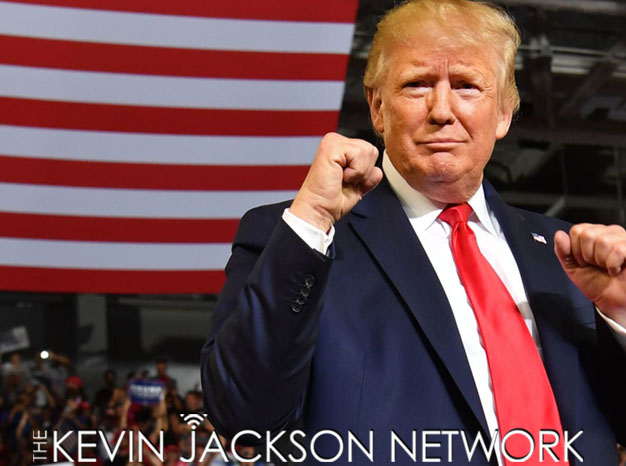
Meanwhile, Republicans, led by Donald Trump, have something Democrats currently lack: a gravitational center. Agree with him or not, Trump defines the conversation. He sets the pace and dictates the terms. And perhaps most importantly, he understands something Democrats seem to have forgotten: politics isn’t just about policies. It’s about clarity.
Voters don’t need a 47-point plan wrapped in academic jargon. They need to know what you stand for, why it matters, and whether you have the spine to follow through. That’s it. That’s the whole game.
And right now, Democrats are playing a different game entirely. One where messaging is fragmented, leadership is ambiguous, and electoral losses are explained away instead of examined.
So when someone asks, “Who is the leader of the Democratic Party?” the honest answer isn’t just nobody.
It’s worse than that.
It’s that too many people think they are.