
There’s something almost poetic about watching a group of nations suddenly remember their responsibilities the moment the safety net starts to disappear.
NATO allies are scrambling, not because they’ve discovered courage, but because they’ve discovered consequences.
For decades, the arrangement was simple. America played Atlas, holding up the world’s security while Europe played philosopher, debating ethics over espresso and issuing sternly worded statements that landed with all the force of a damp napkin. Meanwhile, the United States funded the muscle, trained the troops, and, when necessary, cleaned up the mess.
Then along came Donald Trump, who looked at NATO the way a hard-nosed CEO looks at a bloated department: “What exactly do you people do here?”
And just like that, the era of polite indulgence ended.
🚨BREAKING: 100,000 U.S. troops and $60 billion a year defending Europe — and zero help on Hormuz.
Time to bring them home.
No more free rides. pic.twitter.com/Dnq7RTWC6a
— Tironianae 🍊🍊 Z. – Ultra Verbum Vincet (@Tironianae) May 10, 2026
The Trump Doctrine: Pay Up or Step Up
Trump’s approach to global affairs has never been wrapped in the velvet language diplomats adore. It’s blunt, transactional, and unmistakably effective. While previous administrations treated alliances like sacred relics, Trump treats them like contracts. If you’re in, you contribute. If you don’t, don’t expect premium service.
That philosophy is now rippling through NATO like a thunderclap.
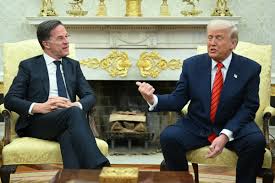
As reported in this piece from Newsbreak, NATO Secretary General Mark Rutte admitted that European nations have “gotten the message” from Trump and are now actively implementing agreements regarding military base usage (source). Translation: the free ride has ended, and suddenly everyone found their wallet.
Funny how that works.
For years, Trump warned that NATO was drifting into irrelevance, weighed down by countries that enjoyed American protection while underfunding their own defense. Critics howled. Pundits clutched pearls. European leaders rolled their eyes and muttered about “American arrogance.”
Yet here we are, watching those same nations hustle to meet obligations they previously treated as optional.
Not because they had a change of heart. Because they had a change of incentives.
Germany’s Lecture Meets Reality
Nothing captures the absurdity of this moment better than Germany’s recent posture. German leadership, in a moment of breathtaking audacity, criticized the United States for its handling of Iran, even suggesting America was being “humiliated.”
This, from a country that had been economically entangled with its adversaries and slow-walking meaningful military contributions for years.
Trump’s response wasn’t a debate. It was action.
The United States announced plans to withdraw 5,000 troops from Germany, marking one of the largest reductions of American forces in Europe in decades (source).
No grand speech. No diplomatic theater. Just a quiet but unmistakable signal: If you don’t respect the partnership, you don’t get the perks.
And suddenly, Europe started listening.
Economic Warfare: Trump’s Favorite Weapon
Critics often misunderstand Trump’s strategy because they’re looking for traditional warfare playbooks. What they miss is that Trump rarely starts with missiles. He starts with markets.
Economic pressure, sanctions, trade leverage, energy policy. These are the tools he wields first, weakening adversaries long before military action becomes necessary.
It’s a strategy rooted in a simple truth: wars are won long before the first shot is fired.
By the time military force is on the table, Trump aims to have already tilted the battlefield so dramatically that victory becomes inevitable.
And here’s the twist: that same strategy applies to allies.
Nations that fail to contribute aren’t just criticized. They’re economically and strategically repositioned until cooperation becomes their best option.
It’s not hostility. It’s leverage.
Europe’s Sudden Awakening
According to Rutte, European countries are now actively ensuring that agreements on military bases are being implemented. Nations like Romania, Greece, Italy, Britain, and France are stepping up logistical support.
Even more telling, multiple countries are pre-positioning naval assets near critical regions like the Strait of Hormuz, preparing for potential future operations.
In other words, they’re doing what they should have been doing all along.
Spain, of course, is still hedging, refusing to allow its bases to be used in certain operations. But give it time. Reality has a way of catching up with ideology.
Because here’s the uncomfortable truth Europe is beginning to confront: they need the United States far more than the United States needs them.
And Trump knows it.
The End of Symbolic Alliances
For years, NATO operated partly as a symbolic institution, a relic of Cold War unity that persisted more out of habit than necessity. Member nations could posture, debate, and delay, secure in the knowledge that America would ultimately handle the heavy lifting.
Trump has shattered that illusion.
Under his leadership, alliances are no longer about shared values scribbled into treaties. They’re about measurable contributions and tangible results.
You bring something to the table, or you’re not invited to dinner.
That shift has profound implications, not just for NATO, but for global geopolitics. It forces nations to reassess their roles, their responsibilities, and their reliance on American power.
And it exposes a harsh reality: many allies had grown comfortable being dependents rather than partners.
The Hypocrisy Exposed
Perhaps the most entertaining aspect of this transformation is watching the same leaders who once criticized Trump now quietly adopt his framework.
They called him reckless. Now they’re implementing his policies.
They mocked his demands. Now they’re meeting them.
They dismissed his warnings. Now they’re scrambling to respond.
It’s a masterclass in political irony, the kind that doesn’t need commentary because it writes itself.
A New Global Order
What we’re witnessing isn’t just a policy shift. It’s a recalibration of global power dynamics.
Trump’s insistence on accountability is reshaping alliances into something more durable and more honest. Instead of hollow commitments, we’re seeing real investment. Instead of symbolic gestures, we’re seeing operational readiness.
That doesn’t mean every nation is fully on board. Resistance remains, particularly among leaders clinging to outdated notions of diplomacy.
But the trend is unmistakable.
The message has been received.
Respect Is Earned
In the end, Trump’s approach boils down to a principle so simple it almost feels revolutionary in modern politics: respect must be earned.
Not demanded. Not assumed. Earned.
For too long, America extended protection without requiring proportional contribution. That era is over.
Now, allies are discovering that partnership comes with expectations.
And as NATO nations scramble to meet those expectations, one thing becomes clear: when the rules change, the game changes with them.
The question isn’t whether Europe will adapt.
It’s how quickly they can catch up.