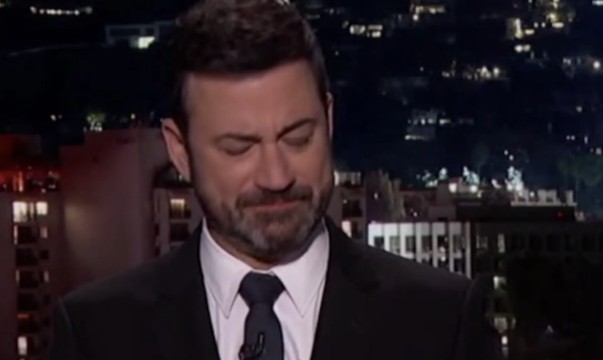
Jimmy Kimmel recently admitted that his contract negotiations with ABC aren’t proceeding according to their normal schedule.
Translation: somebody in accounting finally asked a dangerous question.
“What exactly are we paying for here?”
For years, late-night television operated on a beautifully simple arrangement. A comedian walked onto a stage, made people laugh, interviewed celebrities, and occasionally took a harmless shot at politicians from both parties.
Then something happened.
Somewhere along the way, late-night hosts stopped trying to be funny and started auditioning for faculty positions in the Department of Progressive Studies.
The joke became a sermon. And the audience became a focus group.
Jimmy Kimmel wasn’t alone, of course. He had plenty of company.
Stephen Colbert transformed from a brilliant satirist into a human subscription service for Trump outrage. And that simp was seen doing Michigan Public Service TV.
Seth “What his name” Meyer is so not funny that he became the guy who must explain the joke after the joke.
Watching modern late-night often feels like attending a mandatory HR seminar hosted by people who think they’re rebels.
Nothing says counterculture quite like agreeing with every corporation, every university administrator, every Hollywood executive, every major media outlet, and every government agency at the same time.
Che Guevara would have asked these people to stop embarrassing the revolution.
The real problem isn’t politics.
Johnny Carson joked about politics.
Jay Leno joked about politics.
David Letterman joked about politics.
The difference is they joked about politicians.
Modern late-night hosts frequently behave like unpaid campaign staffers who occasionally interrupt their activism to interview an actor promoting a Marvel movie.
There’s a reason audiences have drifted away.
Comedy requires surprise.
Modern late-night hacks delivers predictability with Swiss-watch precision.
You already know the punchline before Kimmel tells it.
Trump is bad. Republicans are stupid. Conservatives are dangerous.
Democrats mean well.
Applause.
Commercial break.
Repeat until cancellation.
It’s less a comedy show than a Roomba trapped in a political convention. It keeps bumping into the same walls and congratulating itself for discovering them.
What’s especially funny is that Hollywood spent years inventing elaborate explanations for declining ratings.
Streaming. Social media. Then TikTok attention spans.
Mercury in retrograde.
Russian bots.
Climate change.
Anything except the possibility that viewers stopped showing up because the comedy wasn’t funny.
That’s the one explanation nobody in the entertainment industry wanted to entertain.
Imagine opening a restaurant where half the country is told they’re idiots every night, then acting shocked when business slows down.
Imagine a gym that insults customers for being out of shape. Or perhaps a barber who spends thirty minutes explaining why you’re a threat to democracy before picking up the scissors.
At some point, people simply find another barber.
That’s exactly what’s happened.
The audience didn’t stop laughing. They just stopped laughing there.
Instead, they migrated to podcasts, independent creators, stand-up specials, YouTube channels, and social media personalities who understand a revolutionary concept:
People enjoy being entertained.
Who knew?
The irony is that Jimmy Kimmel used to be genuinely funny. This is the same guy who helped create “The Man Show,” a program so politically incorrect that modern ABC executives would probably attempt to exorcise it with sage and diversity consultants.
Back then Kimmel mocked everybody.
Now he mostly lectures MAGA: the majority of the country.
That’s not growth, it’s ideological captivity.
The old Kimmel would probably make fun of the new Kimmel. And he’d probably get better ratings doing it.
Which brings us back to these contract negotiations.
Maybe ABC renews him.
Maybe they don’t.
That’s almost beside the point.
The bigger story is that networks are finally confronting a reality they’ve spent years avoiding.
People tune into comedy because they want to laugh.
Not because they want a nightly reminder that a millionaire celebrity living behind gates in California has concerns about their voting habits.
Late-night television once brought Americans together.
Republicans watched.
Democrats watched.
Independents watched.
Nobody demanded ideological identification at the door.
The host’s job wasn’t to validate one tribe. It was to entertain all of them.
Today, many late-night hosts seem perfectly content performing for increasingly narrow audiences while congratulating themselves on their moral courage.
Which is easy to do when every person in the room already agrees with you.
Real comedy has risk. It creates discomfort.
Real comedy occasionally offends everybody.
What it doesn’t do is function as a nightly affirmation app for politically like-minded viewers.
So when Jimmy Kimmel talks about uncertainty, he’s probably describing more than a contract.
He’s describing an entire industry that spent a decade confusing applause with popularity.
Those aren’t the same thing.
Applause comes from the people in the studio.
Popularity comes from the people who stopped showing up.