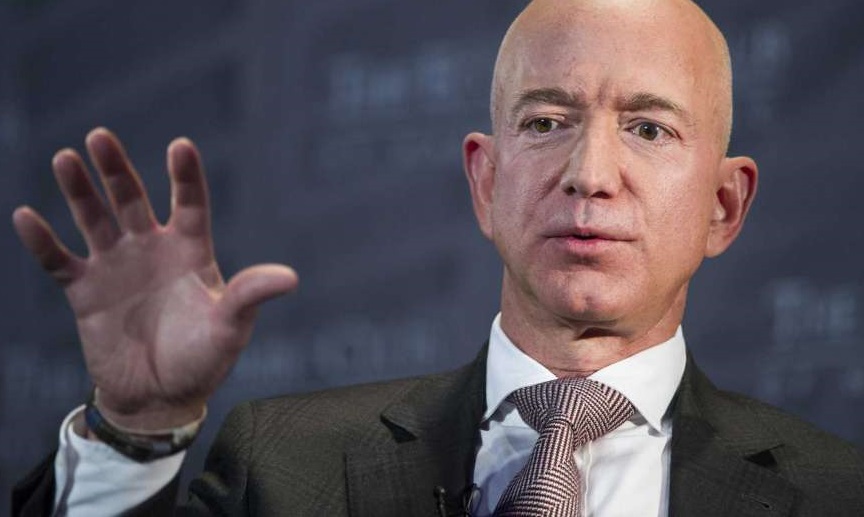
Jeff Bezos reportedly spent $250 million to discover something most Americans learned for the price of a cable bill.
“They don’t listen.”
According to reports, that was Bezos’ assessment of the people running The Washington Post. Three ordinary words. No corporate jargon. No consultant vocabulary. No strategic framework printed on expensive paper and presented in a hotel ballroom where everybody nods thoughtfully while secretly checking email.
Just three words.
“They don’t listen.”
Oddly enough, Bezos may have stumbled into the most accurate diagnosis of modern Leftism ever uttered by a billionaire.
What makes the statement fascinating isn’t that it came from Bezos. Plenty of business leaders criticize employees. Plenty of owners become frustrated with organizations they purchased. Newspapers have been producing management headaches since Benjamin Franklin was trying to convince printers not to publish nonsense between advertisements for imported rum.
What makes the statement interesting is where Bezos learned the lesson.
The Washington Post wasn’t supposed to become his worst investment.
“The people there are terrible,” Bezos told Trump over dinner in December 2024, according to an excerpt obtained by The Post ahead of the June 23 release of “Regime Change: Inside the Imperial Presidency of Donald Trump.“
The paper represented influence. Prestige. Cultural power. For years, it functioned as one of the crown jewels of the anti-Trump resistance. Owning it offered a front-row seat to the conversation that shaped elite opinion.
Unfortunately, conversations require at least two participants.
A curious thing happened over the last decade. Institutions that built their reputations on listening gradually became deaf.
Universities promised dialogue, then informed students which opinions qualified for discussion. Corporate America launched campaigns celebrating diversity of thought, provided every thought arrived from the same ideological zip code. Journalists lectured Americans about understanding different perspectives while treating half the country the way Victorian aristocrats viewed chimney sweeps: fascinating from a distance, alarming up close.
Listening survived as branding long after it disappeared as a practice.
Imagine a marriage counselor who spends twenty years explaining communication while wearing industrial ear protection. That’s roughly what happened to large portions of the American establishment.
Naturally, Americans noticed. Thought, not immediately.
Reality rarely announces itself with fireworks. More often it arrives like a roof leak.
One drop doesn’t seem important. Then another appears. Eventually somebody places a bucket in the living room and begins asking uncomfortable questions.
Trump’s rise should have triggered those questions. Perhaps Brexit should have triggered those questions.
The collapse of trust in corporate media should have triggered those questions. Also, the migration away from progressive governance in many parts of the country should have triggered those questions.
Instead, explanations became increasingly creative.
A political movement once famous for questioning authority developed an impressive talent for questioning everything except its own assumptions.
Citizens expressed concerns about immigration. Experts explained why citizens were confused.
Parents objected to school policies. Experts explained why parents misunderstood.
Consumers rejected corporate activism. Experts explained why consumers needed additional education.
Voters delivered election results. Experts explained why voters had chosen incorrectly.
At some point, a reasonable person begins to suspect the experts are participating in an elaborate hostage negotiation with reality.
History wandered into the room around this time carrying a warning label.
Every institution eventually faces a choice. Listen to feedback or explain it away.
The French aristocracy chose explanation. That strategy worked magnificently right up until it didn’t.
Soviet planners chose explanation. Crop failures, economic stagnation, and public dissatisfaction somehow always required additional planning.
Corporate giants throughout history have made the same mistake. Sears ignored changes in retail. Kodak ignored digital photography. Blockbuster ignored streaming.
Reality possesses many virtues, and patience is not among them.
Which brings us back to Bezos.
Running Amazon requires listening because customers express their opinions with money. Ignore enough customers and they leave. Ignore enough investors and they leave. Ignore enough market signals and competitors arrive carrying shovels.
Business disciplines arrogance. Politics often rewards it.
Media institutions can become especially vulnerable because they inhabit a strange ecosystem. Readers leave. Revenue declines. Credibility collapses. Yet executives continue speaking as though events merely confirm their brilliance.
The remarkable part isn’t Bezos’ epiphany. The remarkable part is how many people seem to be arriving at similar conclusions.
Jillian Michaels recently raised questions about election integrity after observing political developments she found troubling. Elon Musk traveled his own well-publicized path away from progressive orthodoxy. Millions of ordinary Americans have quietly altered political affiliations, voting habits, and assumptions about institutions once considered untouchable.
Different journeys. Similar destination.
Nobody organized a parade.
Nobody distributed commemorative jackets.
Political realignments rarely resemble movie scenes. People don’t stand on mountaintops announcing ideological conversions while orchestras swell dramatically in the background.
Departure tends to happen quietly.
A voter notices a contradiction.
Then another.
A citizen watches a news story that doesn’t match observable reality.
A parent attends a school board meeting.
A business owner encounters regulations created by people who appear unfamiliar with business.
An independent thinker asks a question and receives a lecture instead of an answer.
Eventually curiosity performs one of its favorite tricks.
It keeps going.
That’s the development receiving far less attention than it deserves.
The Left spent decades portraying conservatives as the closed-minded side of American politics. Yet many former Democrats, independents, entrepreneurs, and public figures now describe remarkably similar experiences. Questions were unwelcome. Doubts were discouraged. Disagreement became evidence of moral failure.
No movement remains healthy after replacing persuasion with social pressure.
No institution remains credible after treating skepticism as heresy.
No newspaper remains influential after confusing advocacy with journalism.
Bezos appears to have discovered that lesson the expensive way.
Millions of Americans discovered it for free.
Perhaps that’s why his reported frustration resonates far beyond a struggling newspaper. Those three words describe a pattern voters have observed for years. They explain why trust has evaporated, why audiences have fragmented, why alternative media exploded, and why political loyalties have shifted so dramatically.
Three words.
Not a manifesto.
Not a policy paper.
Not a doctoral thesis.
Just three words.
“They don’t listen.”
The remarkable thing isn’t that Jeff Bezos said them.
The remarkable thing is how many Americans nodded in agreement before he finished the sentence.