
There’s a slow but unmistakable realignment happening inside the Republican foreign policy coalition. And it’s somewhat shocking.
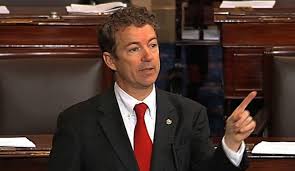
Senator Rand Paul is now reading less like a perennial internal critic of Donald Trump and more like someone increasingly willing to follow the vector rather than argue the compass.
Paul wrote:
I’ve spent my career warning against regime change wars, nation-building, and endless military entanglements. The same voices now attacking Trump’s Iran deal are the architects of every failed intervention of my lifetime. This war must end. I stand with President Trump on peace.
That shift matters because Paul has historically been one of the most consistent Republican voices against overseas entanglements.
Venezuela, Iran, Syria, Iraq-era authorizations—his posture has usually been: Congress should hesitate before it authorizes anything that looks like a staircase into a long war with no visible bottom.
In a 2023 statement issued through his Senate office, Paul said that endless war “weakens our national security, robs this and future generations through skyrocketing debt, and creates more enemies to threaten the United States.”
And for years, that put him in a familiar category inside the GOP: the ideological dissenter. Not outside the party, but often outside the center of its decisions.
What’s changed in the current moment is not Paul’s philosophy in isolation. It’s his positioning relative to Trump’s foreign policy brand, which has increasingly presented itself as a hybrid of two instincts that rarely coexist comfortably in Washington: forceful leverage followed by rapid de-escalation attempts framed as “deal outcomes.”
The Iran framework is where this becomes visible.
Paul is no stranger to opposing intervention pathways, but what’s notable now is that his resistance is not translating into distance from Trump—it is translating into conditional alignment.
That is the arc shift: from persistent critic of Trump-adjacent foreign policy instincts to selective endorser when those instincts produce something that resembles an exit strategy rather than an expansion strategy.
On Venezuela and Iran specifically, Paul’s prior posture was consistently skeptical of escalation pathways. He pushed back against open-ended pressure campaigns and war powers drift. Yet in the current cycle, he is publicly aligning with the administration’s framework approach rather than positioning himself as an internal brake.
That is the key change. Not that he has abandoned skepticism, but that he appears to be placing trust in Trump’s capacity to resolve conflicts quickly enough to satisfy his core concern: preventing long-term entanglement.
This is where the political signal becomes more important than the policy detail. Because alignment in Washington is rarely about agreement on every step. It is about whether someone believes the operator can control the trajectory.
In this case, Paul’s posture suggests he increasingly sees Trump not as someone pulling the party toward intervention risk, but as someone capable of compressing a conflict cycle into a negotiation endpoint.
That is a different kind of trust relationship than what existed during earlier foreign policy disputes.
It also reframes how to interpret the internal Republican dynamics. Figures like Thomas Massie and Marjorie Taylor Greene still represent important friction points in the broader coalition, but Paul’s trajectory is distinct. He is not moving toward isolation from Trump. He is moving toward situational alignment with Trump’s foreign policy outcomes, even when he has historically disagreed with the methods that produce them.
A senator who once defined himself by resistance to intervention is now increasingly willing to validate the administration’s foreign policy framing. Trump delivered what Paul has long argued for—de-escalation, withdrawal pressure, or at minimum, an exit-oriented posture.
That is not just agreement, but directional convergence.
Whether that becomes durable alignment or a temporary overlap depends on whether the next conflict follows the same pattern Paul believes he is seeing—or breaks it.
Because in Washington, the real political story is rarely who changed their mind. It’s who started trusting someone else’s trajectory.
Venezuela was a massive victory, as Iran will almost certainly be. Trump proved that endless wars don’t need to happen. However, sometimes a well-placed conflict fills the bill.