Let’s have a frank discussion about the American Dream.
You know the one: work hard, play by the rules, save your pennies, and eventually, you too can own a modest home with a lawn you’ll complain about mowing. It’s a charming, if antiquated, notion—like using a rotary phone or believing a politician’s promises.
But what if I told you there’s a cheat code? A secret path that bypasses the soul-crushing grind of 40-hour weeks and 30-year mortgages? What if the real pinnacle of modern American achievement isn’t homeownership, but mastering the art of the permanent vacation, funded by the very government that keeps lecturing you about personal responsibility?
Welcome to the new aspiration. The Deadbeat Dream.
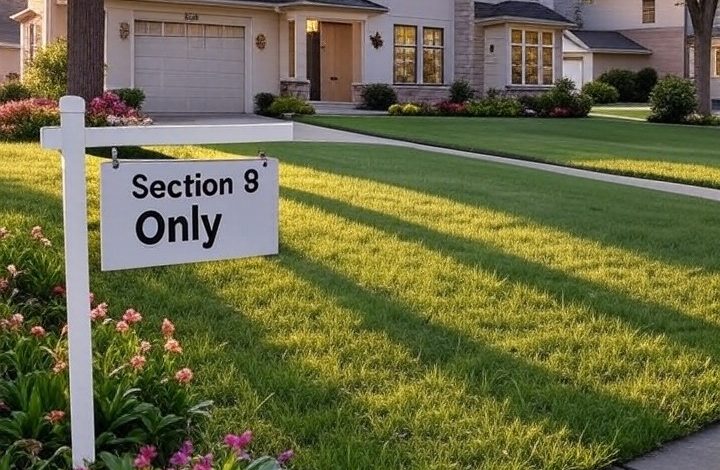
For decades, programs like Section 8 housing vouchers were framed as a temporary hand-up, a safety net for those down on their luck. The goal was simple: prevent homelessness, help people get back on their feet, and eventually return them to the productive, tax-paying fold. It was a noble, if paternalistic, idea.
Somewhere along the line, the “temporary” part got lost in the mail—probably because the mailbox was on the porch of a six-bedroom house with a pool that the program was paying for. The original social contract—we’ll help you while you help yourself—has been quietly rewritten. The new clause reads: We’ll help you instead of you helping yourself.
As reported here,
Once admitted to Section 8, a household may use their vouchers for the program anywhere in the country, with the goal of providing recipients with “greater ability to move into ‘Opportunity Neighborhoods’ with jobs, public transportation, and good schools.”
There are now 4.6 million housing units funded by the United States Department of Housing and Urban Development, including 2.4 million housing units in the HCV program, which houses 5.3 million Americans.
In Arizona, the HCV program covers rents up to $6,020 per month for six-bedroom homes in the Maricopa County ZIP codes of 85298 and 85331.
Of the three available six or more bedroom homes listed for rent in these ZIP codes on Zillow, all were below the $6,020 payment standard.
In 85298, the sole six-bedroom home is on the market for $3,495 per month, and comes in at 3,266 square feet with its own swimming pool and a three-car garage.
In 85331, both available six-bedroom properties are on the market for $6,000 and are two-acre, horse stable-equipped, multi-structure, luxury compounds.
Let that sink in. A taxpayer-funded program will cover $6,020 a month for rent for somebody who can’t even afford an apartment, supposedly.
For context, the median monthly mortgage payment for a home with a 20% down payment in the U.S. is hovering around $1,900. The math is inescapable, and the irony is thicker than the marble on a lobbyist’s kitchen island. The government is willing to pay more for someone’s rent than most hard-working Americans pay to own their own home.
This isn’t a safety net; this is a safety hammock, complete with a built-in canopy and cup holders. It’s a lifestyle upgrade. Why settle for a humble abode when you can shoot for a “horse stable-equipped, multi-structure, luxury compound”? The only thing missing is a complimentary Tesla with a “My Other Car is Also Funded by Your Tax Dollars” bumper sticker.
The historical view here is particularly rich.
The modern welfare state was born from the New Deal and Great Society, a response to profound economic despair. The intent was to prevent starvation and destitution. Today, it has morphed into a system that doesn’t just prevent poverty; it can, in specific, glorious instances, facilitate a standard of living that outstrips the attainability of the very people funding it.
This creates a perverse incentive structure that would make any economist weep into their textbook. The message being subconsciously broadcast is clear: Why strive when you can thrive… on our dime? It’s the ultimate “skip level” in the video game of life. Who needs a promotion when you can qualify for an upgrade?
This ethos is bleeding into the broader culture. Look at the romanticization of the ne’er-do-well. We’re told to admire the “hustle” of the side-gig economy, but for a growing number, the ultimate side hustle is simply gaming the system. Why waste four years and go into soul-crushing debt for a college degree when the most famous crackhead-artist son in America seems to have glided through life on a cloud of privilege, controversy, and inexplicable board memberships?
And then there’s the horizon, gleaming with the promise of technological unemployment.
As AI begins to automate jobs away, the chorus for Universal Basic Income (UBI) grows louder. UBI, in theory, is a fascinating solution to a coming problem. But seen through the lens of our current entitlement arc, it looks less like a stabilizing force and more like the final nail in the coffin of ambition.
Imagine it: a guaranteed income, no questions asked. Pair that with a housing voucher that covers a palace. The “Deadbeat Dream” becomes a national policy. Your grandkids won’t ask for help with their homework; they’ll ask for tips on their application for state-sponsored housing. “Grandpa, can you help me with my application for UBI, my Section 8 house, and how to hide money from my side hustle?”
The greatest hypocrisy isn’t that safety nets exist. A civilized society should have them. The hypocrisy is that the system has been warped to such a degree that it actively incentivizes dependence over dignity, and entitlement over enterprise. It punishes the producer and rewards the professional tenant.
So here I am, playing the sucker’s game. Working, paying taxes, and mowing my own damn lawn. I look at my mortgage statement and then I look at that $6,020 voucher for a house with horse stables. The government isn’t just encouraging deadbeatism; it’s offering a competitive package with benefits my job simply can’t match.
They say you can’t get something for nothing. It turns out you can. You just need to know where to apply.