
Europe Finally Realizes America Isn’t Their Uber Driver With Nukes
For decades, NATO functioned like a dysfunctional family road trip where America did all the driving, paid for the gas, bought the snacks, and somehow still got blamed for the temperature inside the car. Europe sat in the backseat offering critiques, Germany kept asking if we could stop for renewable energy, and France smoked philosophically out the window while pretending it invented freedom.
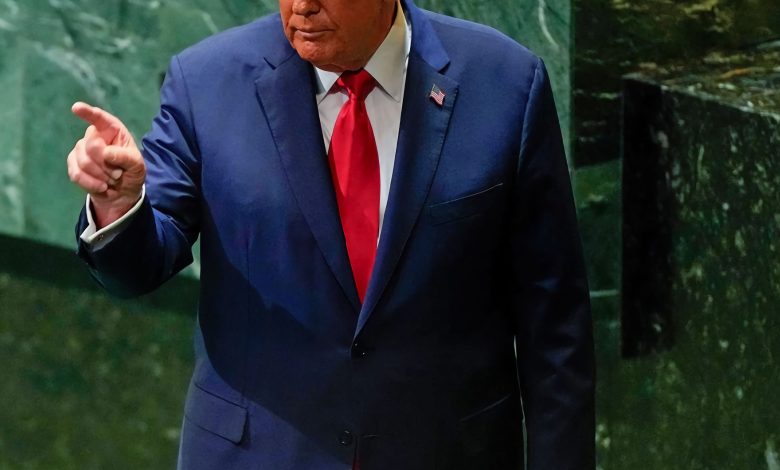
Then came President Trump, who looked at the arrangement the way a contractor looks at a homeowner who says, “Actually, I was hoping you’d just do the work for exposure.”
Trump is rewriting the rules of war, diplomacy, and alliances with the subtlety of a wrecking ball covered in American flags.
- Part I: Wars must be short, decisive, and attached to a clear national purpose.
- Part II: Allies must actually behave like allies.
Anything else is just geopolitical karaoke, where world leaders gather in expensive suits to sing songs about “shared values” while America carries the amplifier up three flights of stairs.
Trump understands something that generations of polished diplomats either forgot or intentionally ignored: America’s most devastating weapon isn’t merely the military. It’s the economy. The military is the exclamation point. The economy is the sentence.
Trump weakens enemies financially first.
He isolates them, strangles access, pressures trade, weaponizes markets, and forces adversaries into increasingly desperate decisions. Military force becomes the final chapter, not Chapter One written by defense contractors and think-tank interns who learned strategy from Netflix documentaries.
And unlike the bipartisan “Forever War Book Club” that dominated Washington for decades, Trump doesn’t appear emotionally attached to military occupation as a lifestyle brand.
As for allies, his doctrine is beautifully simple: contribute something meaningful or prepare to discover how expensive independence really is.
Apparently, NATO is finally beginning to understand this.
According to NATO Secretary General Mark Rutte, European nations have “gotten the message” from Trump and are now ensuring agreements regarding military bases are actually implemented. Imagine NATO members rediscovering that military alliances may occasionally involve military cooperation. Stunning breakthrough.
What changed was not merely rhetoric. Trump stopped treating Europe like a protected museum exhibit full of fragile allies whose feelings required constant preservation. He approached them like business partners who had spent decades arriving late to the meeting while still demanding equal authority over the agenda.
And once consequences entered the equation, everybody suddenly located their sense of urgency.
Trump openly criticized NATO nations for failing to support the United States during the Iran conflict, then followed the criticism with action by announcing plans to withdraw 5,000 troops from Germany.
That decision hit Europe like a homeowner hearing strange noises after years of assuming the security system was permanent.
The withdrawal represents one of the largest reductions of U.S. forces in Germany in decades, arriving immediately after German Chancellor Friedrich Merz publicly criticized America’s handling of Iran while governing a country that can barely keep its own military equipment operational without consulting an instruction manual written during the Cold War.
Germany lecturing America on strategic weakness requires the kind of confidence usually found in people who leave voice notes longer than documentaries. This is a nation that spent years buying energy connected to hostile regimes while assuming the United States military would forever stand guard outside the nightclub checking IDs.
Meanwhile, Europe’s response to Iran had all the muscular intensity of a strongly worded wine menu. Endless summits. Grave expressions. Carefully tailored concern. Yet when actual confrontation loomed, most EU leaders developed a sudden fascination with procedural nuance.
Trump disrupted that rhythm. Worse for the foreign policy class, he exposed it.
Rutte eventually admitted there had been “disappointment” from the American side, though Europeans had “listened.” Of course they listened. Trump transformed NATO from an abstract moral alliance into something with measurable expectations attached to it.
Funny how rapidly accountability sharpens attention spans.
Countries including Montenegro, Croatia, Romania, Portugal, Greece, Italy, Britain, France, and Germany are now cooperating with logistical requests and military support measures. Spain remains reluctant, insisting bases on its territory cannot be used in the Iran conflict, which feels a bit like refusing to help extinguish a kitchen fire because you’re worried about smoke near the curtains.
Eventually Spain will reach the same conclusion every reluctant ally reaches when the geopolitical weather changes: symbolic independence sounds magnificent right up until danger becomes physical.
What Trump recognized long before most Western leaders admitted it publicly is that Europe’s dependence on America had become habitual. NATO members behaved less like equal partners than adult children still quietly using the family streaming passwords while insisting they’d absolutely move out soon.
Once Trump introduced uncertainty into the arrangement, military readiness suddenly became fashionable again across the continent.
That may end up being his most important contribution to NATO.
Not destroying it, as critics predicted, but forcing it to justify its existence beyond catered conferences and ceremonial declarations about “shared democratic values.” Alliances decay when one side assumes obligation while the other side treats contribution as optional.
Rutte also noted that more European nations are now pre-positioning minehunters, minesweepers, and other assets near the Gulf in preparation for possible future operations tied to securing navigation through the Strait of Hormuz.
Naturally, many of these countries are volunteering after the danger phase has already passed, which carries the unmistakable aroma of coworkers appearing triumphantly with a box of donuts five minutes after the office move is complete.
Still, late participation beats permanent irrelevance.
And beneath all the diplomatic choreography sits a reality Trump forced into the open: America is perfectly willing to lead, but increasingly unwilling to subsidize performative alliances where wealthy nations outsource both courage and responsibility to U.S. taxpayers while simultaneously sneering at the very country protecting them.
That arrangement was never sustainable.
Trump simply became the first president blunt enough to say it out loud.