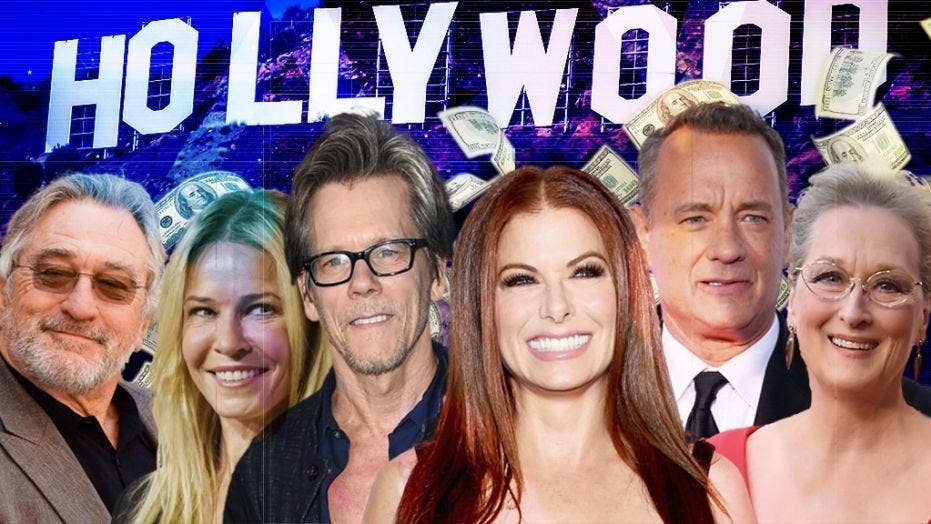
For years, Hollywood operated under the charming delusion that because an actor could convincingly pretend to be a brain surgeon, military commander, constitutional scholar, epidemiologist, climate scientist and geopolitical strategist, he was therefore qualified to lecture the rest of us about any of those subjects.
Now, apparently, the industry is beginning to reconsider.
According to a new report, an increasing number of Hollywood stars are backing away from political commentary, particularly as the 2026 midterms approach. The retreat follows years of increasingly aggressive celebrity activism, culminating in the 2024 election, when some of the biggest names in entertainment threw their considerable celebrity weight behind Kamala Harris. (Reddit)
And suddenly, Hollywood has discovered something the rest of America has known for quite some time:
We don’t actually care what you think about politics.
We care whether the movie is good.
This shouldn’t be revolutionary. It is, however, revolutionary in Hollywood.
Josh Duhamel recently put the matter rather elegantly when he explained that he doesn’t want to alienate half his audience by preaching politics to them. Ethan Hawke went even further, suggesting that a collection of “jet-lagged, drunk artists” might not be the ideal place to seek spiritual or political counsel. (TheWrap)
That is not merely Hollywood learning manners.
It is Hollywood learning economics.
For decades, political correctness was not merely an ideology in entertainment. It became an industrial operating system. You didn’t simply have actors, directors, writers and producers. You had political influencers who happened to have union cards.
And that political machinery was profitable, right up until the audience started unplugging it.
The comparison I keep coming back to is the ecosystem that surrounded the Left for years.
USAID became an ATM for NGOs. ACTBLUE became a financial circulatory system for Democrats. And Hollywood’s political orthodoxy became part of the compensation structure for an enormous entertainment ecosystem. The politics created access, status, publicity, relationships, awards-season approval and, in many cases, employment.
Then Donald Trump came along and started pulling the plug.
Trump has an almost supernatural ability to take a Left-wing cultural assumption, grab it by the collar and throw it into the middle of the street where everyone can see how ridiculous it is.
He didn’t invent the backlash against Hollywood.
He exposed it.
And Hollywood’s problem is that it eventually discovered something terrifying: the audience was not required to come along.
For years, celebrities were told that Americans wanted their political opinions. The evidence was usually another celebrity telling them Americans wanted their political opinions.
It was an extraordinary feedback loop.
Actor endorses politician.
Actor’s friends applaud actor.
Hollywood media reports actor’s bravery.
Actor concludes America has heard actor.
America changes channel.
Then comes the next endorsement.
The machine was so self-contained that nobody apparently thought to ask the customer whether he wanted any of it.
That customer has now answered.
No thanks.
And the reason is not difficult to understand. Hollywood spent years developing an astonishing batting average for being spectacularly wrong about things outside its own profession.
Take climate change. Take the endless apocalyptic predictions. Take the pandemic. Take the vaccine politics. Take the mandates. Take the notion that questioning a government policy or pharmaceutical claim was somehow evidence of moral depravity.
I am not interested in relitigating every argument of the COVID era here. The larger point is more important: Hollywood repeatedly demanded that Americans trust people who had demonstrated no particular expertise on the subject simply because they were famous.
That is not leadership.
That’s celebrity feudalism.
And once enough of those celebrities were revealed to be wrong, people began asking a rather inconvenient question:
Why exactly am I taking medical advice from the guy who played Batman?
This brings us to Robert De Niro.
Robert De Niro has spent decades earning the kind of professional credibility most actors would sacrifice a kidney to possess. Taxi Driver. Raging Bull. Goodfellas. The Godfather Part II.
Then he discovered politics.
It has been an unfortunate trade.
De Niro’s political commentary became so predictable that the man who once terrified audiences merely by entering a room eventually became another familiar voice from the political peanut gallery. Whatever one thinks of his politics, the broader cultural damage is obvious: when an actor repeatedly uses his professional stature to make political pronouncements, eventually audiences begin separating the actor from the character.
And sometimes the character wins.
That’s the irony.
Hollywood spent decades telling us that art transcends politics. Then Hollywood politicized the art.
The audience responded by transcending Hollywood.
And this is where the transformation becomes much more interesting than a few celebrities deciding not to answer questions about Donald Trump.
Because the real revolution isn’t silence.
It’s choice.
The old Hollywood model depended upon scarcity. There were a handful of studios. A handful of networks. A handful of distributors. A handful of executives sitting in Los Angeles deciding what America would watch.
That world is evaporating.
Today, a filmmaker can reach an audience without begging permission from a studio executive who thinks every story needs a political sermon tucked inside the third act.
The Flick Fest, for example, offers independent filmmakers a worldwide streaming platform and accepts films directly from creators, with audience ratings playing a role in its awards process. (The Flick Fest)
And then there is Angel Studios, which has built an entire entertainment model around giving audiences a greater role in determining what gets made and distributed. Its audience-driven model has produced major successes, while its Guild has grown into a substantial community of viewers and investors. (Angel)
That changes everything.
The old Hollywood question was:
“Will the studio let us make this?”
The new question is:
“Will the audience pay to see it?”
That’s a much healthier question.
And it has an interesting side effect.
Actors who once needed Hollywood to validate them can now find audiences elsewhere. Filmmakers can build communities. Producers can raise capital outside the traditional gatekeepers. Independent platforms can distribute content directly. Audiences can vote with something much more powerful than a ballot: their wallets.
That is the real reason Hollywood is getting quiet.
It isn’t because Hollywood suddenly discovered conservatism.
It isn’t because Robert De Niro woke up one morning and decided he had been wrong about everything.
It is because the market finally acquired a voice.
And markets are remarkably intolerant of lectures.
If an actor wants to stand on a stage and tell me how to vote, that’s his business. If he wants to spend his fortune supporting a candidate, that’s his business. If he wants to spend Thanksgiving explaining the intricacies of monetary policy to his relatives, I wish him Godspeed.
But when I buy a movie ticket, I have made a different transaction.
Entertain me.
Make me laugh. Frighten me. Make me think. Make me care about characters who don’t look, think or vote exactly like I do. Give me a story worth remembering.
You can even make a political movie. Great political art has existed forever.
Just don’t confuse storytelling with indoctrination.
Hollywood’s great mistake was believing that Americans went to the movies to receive instructions.
We don’t.
We go to escape the instructions.
And now that audiences have thousands of alternatives, Hollywood has finally discovered the brutal little secret sitting underneath the entire entertainment business:
The audience is the boss.
Not the studio executive.
Not the activist celebrity.
Not the awards-show host.
Not the publicist.
Not the political consultant.
And certainly not the actor who has spent six hours in makeup pretending to be a doctor.
The audience.
Hollywood spent years teaching Americans what to think.
America has now returned the favor.
And Hollywood, remarkably enough, is beginning to listen.
That’s progress.
Now, if we could just get them to stop making superhero movies that require a graduate degree in Marvelology to understand, we’d really have something.