
You likely don’t remember when Joe Biden imposed a 100 percent tariff on Chinese electric vehicles.
In fact, you might not even know that it happened. I bet you missed the part where Democrats organized a protest in the parking lot of a Tesla dealership demanding cheaper Chinese cars.
On Wednesday morning, news broke that the Trump administration is proposing a new round of tariffs to address foreign industrial overproduction. Reuters and the Associated Press both reported the details following an administration briefing. China and Vietnam face proposed rates of 20 percent, with a range of rates for other trading partners. These are proposals, and the precise products and effective dates matter.
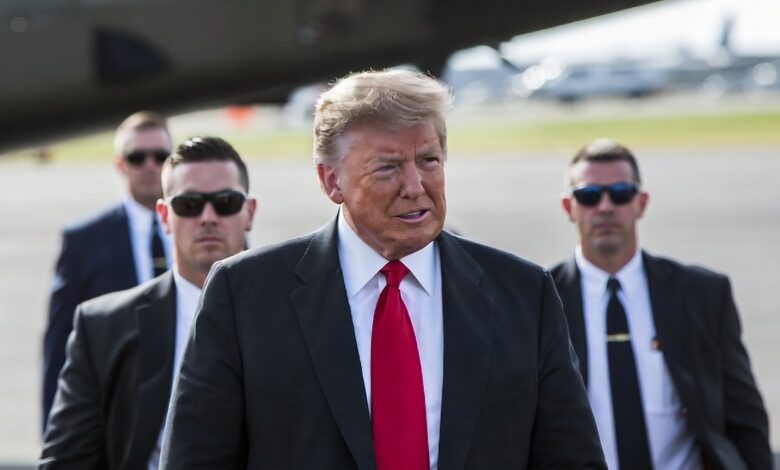
The timing is interesting. Trump was in China last week meeting with Xi Jinping. Now he’s moving ahead with a trade action that includes China. I seem to recall Democrat claiming that Xi is Trump’s puppet master, that is when Putin hands Xi the strings.
And before Democrats start their latest seminar on the evils of tariffs, I suggest they visit the National Archives.
On May 14, 2024, Joe Biden signed a memorandum directing his trade representative to raise tariffs on Chinese imports. Electric vehicles: 100 percent. Solar cells: 50 percent. Semiconductors: 50 percent in 2025. Steel and aluminum products: 25 percent. Some of the increases were scheduled for 2026, which means you can still be enjoying Biden’s tariff policy even after the man has retired.
What Biden understood, at least on the day somebody presented him with that document, is that a country can use trade as an instrument of national policy. And if that country happens to be China, the other participants in the marketplace had better pay attention.
Consider a hypothetical American manufacturer of electric motors. The owner has to buy equipment, hire people, pay the electric company, service the debt, and sell enough motors to make a profit. If he miscalculates demand, he has a warehouse full of motors and an increasingly unfriendly banker.
Now imagine his overseas competitor obtains financing on terms dictated by a government that wants to dominate the global motor business. That government can keep the operation going long after a private American business would have gone bankrupt. Somebody has to buy all those motors, and America’s enormous consumer market is an attractive place to unload them.
The American manufacturer can be brilliant at making motors and still lose the competition to a foreign treasury. Imagine competing in a marathon against a guy who gets to ride the bus for the first 20 miles. I suspect his post-race remarks about the importance of hard work wouldn’t do much for the fellow who came in second.
That’s the issue behind the investigation Trump directed his trade representative, Jamieson Greer, to begin in March.
The administration examined the economic policies of 16 trading partners and their effects on manufacturing capacity. Among the issues were government assistance, artificially cheap financing and other measures that allow production to become disconnected from normal market demand.
Biden had recognized much the same problem. His own administration’s December 2024 supply-chain review described Chinese industrial subsidies and artificially inexpensive credit as sources of economic instability, industrial dependency and persistent excess supply.
So where do Democrats go from here? They won control of Congress in the midterms, and now they have an opportunity to govern. In July, Oregon Senator Ron Wyden introduced the Congressional Trade Powers Reform Act, which would require congressional approval before a president could exercise certain tariff powers. I have no objection to Congress accepting more responsibility. In fact, that would be an interesting development for Congress.
But taking the decision away from Trump means the decision belongs to you, Senator.
What should the tariff on Chinese electric vehicles be? If the answer is 100 percent, perhaps you could explain why your party’s previous president had the right idea. And if the answer is zero, I suggest you make that announcement at an American auto plant.
That is a much more interesting conversation than whether the word tariff makes people mad. And we should have it.

I have spent enough time in business to know who initially writes the check for a tariff. The importing business does. Then comes the negotiation over who ultimately absorbs the cost. Some businesses will raise their prices. Some will squeeze their margins. Some will obtain better terms from suppliers. Others will find new vendors. If I were running one of those businesses today, I’d want real clarity about which products are covered, what the exemptions are, and when this thing starts.
The government has an obligation to get those details right. And I want to know what our government expects the other countries to do in exchange for taking away the tariff. An open-ended import tax with no measurable objective is poor management. Give me the objective, and let’s measure the progress.
In that respect, something happened in October that didn’t get nearly enough attention.
Fourteen economies joined the United States in a statement agreeing to address excess industrial production. Among those signing were the European Union, Japan, South Korea and India. These aren’t all countries looking at the problem from the outside; several are themselves subjects of Washington’s investigation.
They agreed on the existence of the problem. Now comes the part of the exercise where everybody has to look at his own policies. International cooperation always gets a little more entertaining when the people who signed the communiqué discover it also applies to them.
America should demand a fair opportunity to sell the products we manufacture, just as foreign businesses enjoy the opportunity to sell their products here. But we have responsibilities of our own. We have to make it easier to build factories here, train people to work in those factories, keep energy affordable, and quit making American entrepreneurs spend half their professional lives retaining people to decipher government regulations. Protecting a factory from unfair foreign competition won’t accomplish much if Washington is doing a perfectly good job of putting the factory out of business itself.

Trump’s new proposals provide an opportunity to discuss all of that.
And Democrats will soon have the authority to put their own proposals on the table. I’d like to see them take advantage of it.
How do they propose to protect America’s industrial base? If they want to remove Trump’s trade barriers, which specific foreign trade barriers do they intend to negotiate away? If we’re going to change the rules, what commitments do we need from our trading partners?
Joe Biden left behind a 100 percent tariff on electric vehicles and a written explanation of why America needed it. Let the incoming Congress explain what has changed since.
And for once, the answer had better be something more substantive than the guy sitting in the Oval Office.