There are moments in American politics when satire throws up its hands, clocks out early, and mutters, “I can’t compete with this.” This is one of those moments.
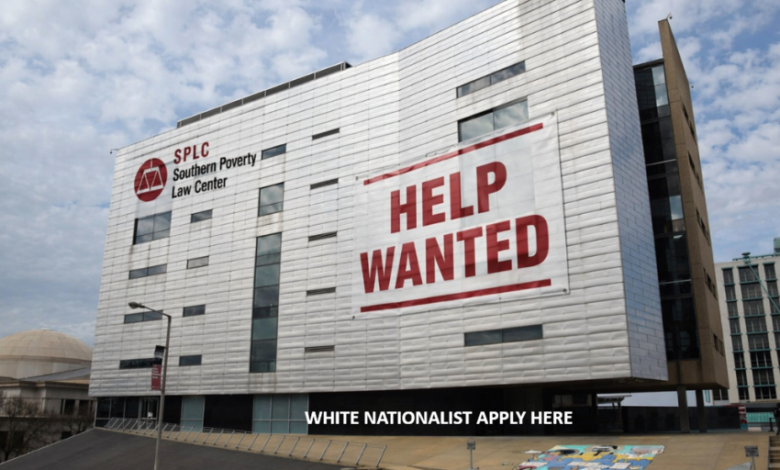
Because just when you thought the Southern Poverty Law Center, an organization that once rode the moral high horse like it was Secretariat in the Kentucky Derby, couldn’t possibly outdo its own reputation for selective outrage, it delivers a plot twist so ridiculous it deserves its own Netflix category. Not documentary. Not comedy. Something in between. Call it “unintentional self-parody.”
Here’s the setup, and it barely needs embellishment.
According to reporting from Not the Bee, the SPLC, after facing scrutiny over alleged financial entanglements and questionable targeting practices, quietly removed the Ku Klux Klan from its list of hate groups.
Yes, that Ku Klux Klan.
The one with the robes. The cross burnings. The whole “greatest hits of American shame” catalog.
Gone. Poof. Like Eric Swalwell’s Tinder account.
Now, if you’re trying to process this with logic, stop. Logic packed its bags somewhere around paragraph one. This is interpretive dance now. You’re supposed to feel your way through it.
Because the implication here isn’t just absurd, it’s almost performance art. When accused of questionable behavior involving extremist groups, the solution wasn’t transparency, accountability, or even a halfway convincing explanation. No, the solution was bureaucratic alchemy. If the KKK isn’t on the hate list, then funding them isn’t controversial. It’s… what? Philanthropy? Cultural preservation?
At this rate, you half expect a press release explaining that arson isn’t illegal if you redefine fire as “aggressive warmth.”
And while that might sound like exaggeration, the logic tracks disturbingly well.
This is the same ideological ecosystem that has spent years expanding the definition of “hate” to include everything from traditional values to poorly worded tweets from 2009. Entire reputations have been torched over less than what the Klan has historically stood for. Careers ended. Businesses boycotted. People digitally exiled.
Yet somehow, in this curious little twist of fate, one of the most historically recognized hate groups in existence gets… rebranded.
Not reformed or dismantled. Rebranded.
Which raises a question so obvious it practically shouts: what exactly does “hate” mean anymore?
Because if the standard is flexible enough to remove the KKK while simultaneously expanding to include mainstream conservative viewpoints, then we’re not dealing with a moral framework. We’re dealing with a political tool. A rubber stamp. A labeling system that adjusts depending on who needs to be targeted and who needs to be protected.
And once you see it that way, a lot of things start to make sense.
The SPLC didn’t start this way, at least not on paper. Founded in 1971, it positioned itself as a watchdog against genuine civil rights abuses, earning credibility through legal victories against actual extremist organizations. There was a time when its work, however controversial in execution, aligned with broadly accepted moral principles.
But somewhere along the road, the mission drifted.
Gradually at first, then all at once.
The organization began casting a wider and wider net, labeling mainstream conservative groups alongside fringe extremists, blurring distinctions that used to matter. Critics pointed out that this expansion conveniently coincided with increased fundraising. After all, the more “hate” you can identify, the more urgent your existence becomes. It’s not just activism at that point. It’s business.
And business, as it turns out, thrives on fear.
Which brings us back to this latest episode, where the solution to criticism wasn’t to narrow the scope or restore credibility, but to double down on the very elasticity that created the problem.
Because when your definitions are fluid, your accountability evaporates.
We now live in a moment where an organization historically dedicated to identifying hate can, when convenient, decide that one of the most universally recognized hate groups simply doesn’t qualify anymore. Not because the group changed. Not because history was rewritten. But because the classification became inconvenient.
It’s the moral equivalent of a referee who, after being accused of bias, decides the best solution is to remove the rulebook entirely.
No rules, no fouls, and no problem.
And if that weren’t enough to make your head spin, consider the broader context.
This comes on the heels of heightened political tension, including an attempted assassination of President Donald Trump that, depending on where you get your news, was either treated with the gravity it deserved or filtered through layers of narrative gymnastics. In some corners of the media landscape, the focus seemed less on the act itself and more on how it could be framed without disrupting existing political storylines.
Which leads to one of the more biting ironies in all of this: in a world where speech is often labeled as violence, actual violence is sometimes treated as… contextual.
Manageable. Explainable. Almost negotiable.
So when the SPLC allegedly removes categories or reshapes definitions in ways that defy common sense, it doesn’t exist in isolation. It’s part of a larger pattern where language is no longer a tool for clarity, but a weapon for control.
Words don’t describe reality anymore. They manufacture it.
And once that door is open, anything is possible.
Up can be down. Wrong can be right. And apparently, the KKK can be… not a hate group.
If you’re looking for consistency, you won’t find it here. What you’ll find instead is something far more revealing: a system that prioritizes narrative over truth, ideology over integrity, and optics over accountability.
And perhaps the most telling part of this entire episode isn’t the decision itself, but the expectation that people will accept it. That the public will nod along, adjust their understanding of reality, and move on as if nothing unusual happened.
Because that’s the real gamble.
Not that the move makes sense. Not that it holds up under scrutiny. But that it doesn’t need to.
Just say it confidently enough. Repeat it often enough. Surround it with the right buzzwords, and maybe, just maybe, people will stop questioning it.
But here’s the problem with that strategy.
Every time something like this happens, a little more credibility slips through the cracks. A little more trust erodes. And eventually, even the most loyal audience starts to notice that the emperor isn’t just underdressed. He’s hosting a fashion show and insisting everyone else is blind.
So yes, this story is absurd. It’s outrageous. It’s almost funny in the way a magic trick is funny when you can see the wires.
But underneath the humor is something far more serious.
Because when institutions tasked with defining right and wrong start rewriting those definitions on the fly, the consequences don’t stay confined to press releases and headlines. They ripple outward, shaping how people understand justice, accountability, and truth itself.
And if those foundations become unstable, everything built on top of them starts to wobble.
Which leaves us with a final thought, equal parts comedic and sobering.
If removing the KKK from a hate list is now a viable crisis management strategy, then we’re no longer debating politics. We’re watching improv.