For two decades, America fought wars like a distracted dad assembles IKEA furniture while watching a football game.
Politicians in pressed suits assured us that chaos was “progress,” while generals appeared on cable news sounding like men trying to explain why the lawnmower exploded after filling it with pudding.
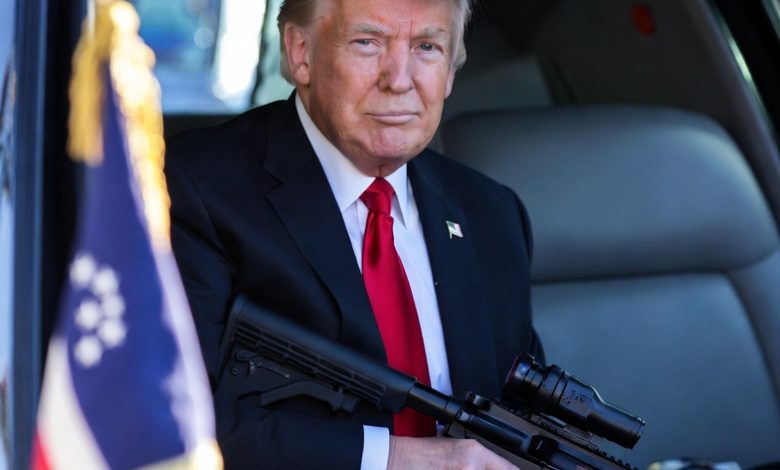
Then Donald Trump walked back into the White House, and suddenly the United States military stopped resembling a bloated DMV with drones.
Now comes Venezuela. Or more specifically, what may go down as one of the most astonishingly efficient military operations Americans have witnessed in modern times. And the truly delicious part of it all is that the media still hasn’t figured out how to talk about it. They’re trapped between hating Trump and confronting a reality too obvious to ignore: the operation was a masterpiece.
According to a Venezuelan insider speaking publicly in a clip circulating online, America entered the country with such overwhelming intelligence superiority that Maduro’s regime may as well have handed over a laminated blueprint and a set of spare keys. The insider detailed how U.S. forces possessed extensive knowledge of military installations, troop schedules, underground tunnels, utilities, bunker specifications, weapons inventories, and even the thickness of reinforced concrete protecting enemy assets. That’s not reconnaissance. That’s omniscience wearing combat boots.
BREAKING: Intelligence Provided to US Government From Sources Inside Maduro Regime Included Bunkers, Underground Tunnels, Security Convoy, Weapons, and Military Installations, According to Affidavit
“We had photographs.”
“We knew everything.”@thelatmg @latimesstudios_ https://t.co/TCoJVZJdXh pic.twitter.com/Z00eIHWPYP
— Catherine Herridge (@C__Herridge) April 30, 2026
This wasn’t America lumbering into another nation hoping Google Maps still worked.
This was America operating like a chess grandmaster who secretly replaced all the opponent’s pieces with Bluetooth devices six months earlier. Every route mapped. Every bunker cataloged. Every vehicle photographed. Troop movements tracked so precisely that Venezuelan forces probably felt less like soldiers and more like contestants trapped inside a reality show called Who Forgot America Has Satellites?
And here’s where the story grows even larger than Venezuela itself.
The operation reportedly exposed the presence of foreign actors embedded inside Maduro’s military structure, including Chinese, Russian, Iranian, North Korean, and Cuban involvement. For years conservatives warned that America’s enemies were building strategic footholds throughout Latin America while our elites focused on pronouns, carbon footprints, and whether toddlers should be allowed to identify as hummingbirds. Predictably, those warnings were dismissed as paranoia by the same people who believed Hunter Biden’s laptop was “Russian disinformation” right up until it inconveniently became real.
Yet Venezuela became the geopolitical equivalent of pulling back a motel curtain and discovering every burglar in the neighborhood having a strategy meeting.
China, especially, has treated South America like a pawn shop with mineral rights. Through infrastructure deals, surveillance technology exports, resource extraction agreements, and debt diplomacy, Beijing has spent years quietly planting itself throughout the Western Hemisphere. The Council on Foreign Relations documented China’s enormous economic expansion in Latin America years ago, though many in Washington preferred pretending this was merely about “trade cooperation.”
What Venezuela demonstrated is that Trump’s administration not only understood the threat, but apparently mapped it down to the electrical wiring.
That should terrify America’s enemies.
It should also embarrass America’s political class, because for years they sold the public a version of military strength measured almost entirely by diversity seminars and PowerPoint presentations about “extremism” among suburban dads with American flags in their garages. The Pentagon under progressive influence often resembled a corporation trying to market yoga pants rather than an institution designed to vaporize hostile regimes.
Meanwhile, the adults were apparently back in the classified rooms doing real work.
And can we pause briefly to appreciate the poetic absurdity of Cuba getting smoked while protecting Venezuela?
Yet when real military power arrived, the revolutionary mystique evaporated faster than campaign promises after Election Day.
Because ideology is not capability.
For years America’s enemies convinced themselves the United States had grown soft.
Frankly, they had reasons to think so. The Afghanistan withdrawal under Joe Biden projected weakness on a scale almost artistic in its incompetence. Americans watched billions in equipment abandoned while Taliban fighters paraded around with our hardware like teenagers who discovered the keys to Dad’s Corvette.
Our adversaries saw confusion, hesitation, and leadership terrified of bad press.
Trump’s return changed the equation immediately.
Unlike the foreign-policy establishment, which often treats military force like a leaking faucet that should drip endlessly for twenty years, Trump approaches conflict with the mentality of a nightclub bouncer who intends to end the problem before the second sentence finishes leaving your mouth. Overwhelming force. Clear objectives. Total dominance. Then leave.
The Venezuelan incursion reflects precisely that philosophy.
Notice what’s absent from these reports: chaos.
No endless “nation-building.” No theatrical speeches about understanding the emotional needs of hostile militants. No desperate media leaks about uncertainty. Instead, there appears to have been a level of coordination and intelligence penetration so sophisticated that it exposed multiple hostile governments simultaneously while dismantling infrastructure in the process.
Even more humiliating for America’s adversaries is what this operation revealed about stolen technology.
For years, China has vacuumed up American intellectual property like a Roomba programmed by the CCP. Cyber espionage, industrial theft, infiltration of universities, corporate espionage, defense-sector targeting, all of it has been extensively documented. The FBI has repeatedly warned about China’s massive espionage campaigns against the United States.
Yet despite all that theft, despite decades of copying aircraft designs, missile systems, software architecture, and surveillance technology, Venezuela reportedly proved something devastating: possessing stolen blueprints does not equal possessing American capability.
Anybody can play a piano, but it won’t make you Mozart.
America’s true advantage has never merely been equipment. It’s integration. Logistics. Intelligence fusion. Operational flexibility. Training. Innovation under pressure. The ability to combine satellites, cyberwarfare, human intelligence, special operations, surveillance, and precision strikes into a synchronized ballet of destruction that feels less like war and more like physics enforcing itself.
And under Trump, that machinery appears fully awake again.
Naturally, critics will wring their hands. They always do. Somewhere, a panel discussion is currently unfolding among people who think masculinity is a public health crisis while Iran pursuing nuclear weapons is “complex.” They’ll question whether America should “project power” abroad, usually while forgetting that hostile foreign regimes don’t disappear because NPR interns light scented candles for peace.
Strength prevents war more often than weakness ever will.
History proves it repeatedly.
Ronald Reagan understood this during the Cold War. Peace came not because the Soviet Union was gently persuaded during a campus drum circle, but because America demonstrated such overwhelming economic and military superiority that Moscow eventually realized the game was unwinnable. “Peace through strength” sounds cliché only because it keeps working.
Trump understands it instinctively.
That instinct is precisely why the Venezuelan operation matters beyond Venezuela. America’s enemies now know something they desperately hoped was no longer true: the giant still has claws, and apparently it has memorized the floorplan of your house.
Somewhere in Beijing, military planners are recalculating timelines. Also, somewhere in Tehran, officials are wondering which tunnels America already mapped. Finally, somewhere in Caracas, surviving Maduro loyalists are likely staring at walls wondering what happened.
That’s what dominance looks like.
Not endless speeches. Not hashtags. Not diplomatic interpretive dance performed by bureaucrats in Brussels.
Real dominance arrives quietly, carrying satellite imagery, bunker schematics, and enough intelligence penetration to make enemy governments feel spiritually naked.
For years, America’s rivals convinced themselves the empire had grown exhausted. Venezuela may become remembered as the moment they discovered the old lion was merely sleeping.
And Trump?
He didn’t just wake it up.
He reminded it what its teeth were for.