

There are magic tricks, and then there are Washington DC magic tricks.
One involves a deck of cards and a charming smile. The other involves millions of dollars, a disclosure form, and the sudden insistence that what you saw… you didn’t actually see.
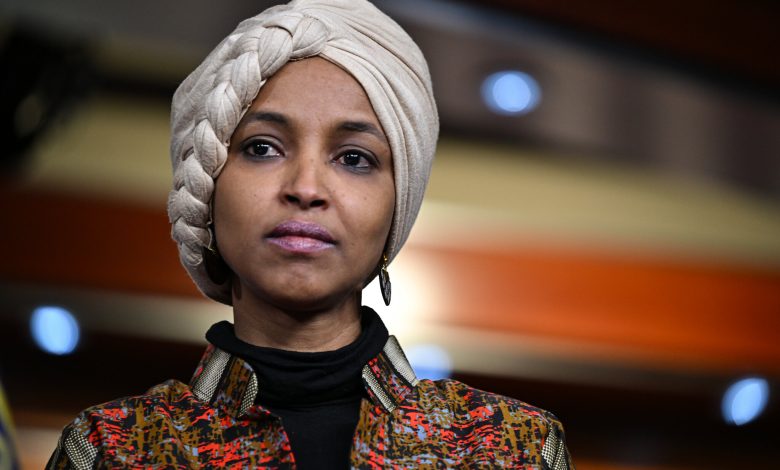
Enter Ilhan Omar, who recently unveiled a financial vanishing act so bold it makes Vegas illusionists look like amateurs working a birthday party. According to a Wall Street Journal report, Omar’s previously reported assets, once estimated between $6 million and $30 million, have now been revised to somewhere between $18,004 and $95,000.
That’s not a correction. That’s a financial cliff dive without a parachute.
Now, we’re told this dramatic shift is the result of an “accounting error.” And while most Americans might accidentally misplace a receipt or forget to log a coffee purchase, it takes a special kind of arithmetic to miscalculate wealth on a scale that resembles a small hedge fund. One doesn’t simply misplace millions like spare change between couch cushions. That’s not an error. That’s an event.
Yet, in Washington, events have a funny way of being rebranded as misunderstandings. In fact, Omar may have figured out a better way to get her funds, as Sen Joni Ernst suggested:
Sen. Joni Ernst just exposed Rep. Ilhan Omar tried to funnel $1 million in taxpayer dollars to a so-called substance abuse clinic in Minnesota!
This “clinic” operates above a Somali restaurant, run by 3 individuals who all list the identical residential address on IRS filings,… pic.twitter.com/zxOrHWI050
— Bridgett Fertig (@LightOnLiberty) March 21, 2026
The Elastic Nature of Political Wealth
Although politicians have long preached the gospel of transparency, their finances often behave like elastic bands—stretching when convenient, snapping back when scrutiny arrives. This isn’t a new phenomenon. Historically, public office has served as a gateway not just to influence, but to financial opportunity dressed in the polite language of “consulting,” “speaking fees,” and “advisory roles.”
Consider the broader pattern. Over decades, members of Congress have routinely entered office with modest means and exited as millionaires. While some of that can be explained by book deals or legitimate investments, the frequency with which this transformation occurs has raised eyebrows across ideological lines. The phrase “public servant” begins to sound less like a job description and more like a clever branding exercise.
Which brings us back to Omar.
Because when a financial disclosure inflates into the millions and then deflates into near obscurity, the question isn’t just “what happened?” It’s “why now?”
Timing Is the Real Currency
Context, as always, is king.
With Donald Trump back in the political driver’s seat and renewed scrutiny from House Republicans, the environment in Washington has shifted. Quiet corridors have grown louder. Oversight, once treated like an optional accessory, has become a central feature of the political landscape.
In that kind of climate, numbers suddenly matter more. Paper trails, once ignored, start to glow under investigative light. And when that happens, those who previously appeared financially flush might find it advantageous to… simplify.
An “accounting error,” after all, is a remarkably convenient explanation. It carries no intent, no malice, just the suggestion of an innocent miscalculation. Yet when the scale of the error stretches into eight figures, innocence begins to feel like a thin blanket in a cold room. I believe Omar’s new financial disclosure as much as I believe she was attacked:
🚨🇺🇸 DID ILHAN OMAR QUARTERBACK A FAKE ATTACK?
This slow motion, zoom in examination of the game tape gives an up close look at radical lefty all-star Ilhan Omar setting the runner in motion while simultaneously cueing the snap with a call for Kristi Noem’s Impeachment. pic.twitter.com/IQ8LCYUO5B— Propaganda PD (@PropagandaPD) January 29, 2026
The Hypocrisy Writes Itself
For years, Omar and her ideological allies have been among the most vocal critics of wealth accumulation, often framing economic disparity as a moral failing of the system. The rhetoric has been relentless: tax the rich, regulate success, redistribute excess.
And yet, here we are, watching a financial narrative that once placed her comfortably within the very category she critiques—only to see that status quietly erased when questions emerged.
It’s a curious contradiction. Wealth is problematic… until it’s yours. Transparency is essential… until it becomes inconvenient. Accountability is non-negotiable… until it applies inward.
The irony isn’t subtle. It’s practically waving from the rooftops.
A Broader Pattern?
Although this story centers on one individual, it hints at something larger. Washington operates on networks—of money, influence, and relationships that often intersect in ways the public never fully sees. Campaign finance systems, nonprofit pipelines, and political action committees create a complex web where dollars move with remarkable fluidity.
When parts of that system are disrupted, whether through policy changes or enforcement actions, the ripple effects can be significant. Funding streams dry up. Opportunities narrow. And those who once benefited from the flow may find themselves adjusting their financial narratives accordingly.
It’s not unreasonable to ask whether Omar’s situation is an isolated incident… or the first visible crack in a much larger structure.
The Role of Disclosure
One of the most glaring issues exposed by this episode is the nature of congressional financial disclosures themselves. These filings rely on broad ranges rather than precise figures, allowing for significant ambiguity. An asset can be listed anywhere within a wide bracket, creating room for interpretation—and, evidently, correction.
For a system designed to ensure transparency, that lack of precision feels like a feature rather than a flaw. It offers just enough clarity to satisfy legal requirements, while leaving plenty of space for revision if circumstances change.
Or if scrutiny increases.
Follow the Money… Or Try To
The old investigative mantra still holds: follow the money. But in Washington, that’s easier said than done. The trail often winds through layers of entities, transactions, and legal frameworks that obscure more than they reveal.
Still, the principle remains sound. When financial narratives shift this dramatically, it’s worth asking where the money went—or whether it was ever where it was claimed to be in the first place.
Because numbers, unlike rhetoric, have a way of grounding reality. They either add up… or they don’t.
The Real Question
Ultimately, this isn’t just about Ilhan Omar. It’s about trust of Leftists.
Public officials are entrusted with power, influence, and responsibility. In return, they are expected to operate with a degree of transparency that allows the public to assess their actions and motivations. When financial disclosures swing wildly between extremes, that trust erodes.
And once trust is gone, every explanation—no matter how benign—sounds like a rehearsed line in a poorly written play.
Closing Thoughts
Perhaps there is a perfectly reasonable explanation for this financial reversal. Ok, I’m LMAO too on that.
But let’s pretend for a moment that is was an accounting error of historic proportions, a mathematical anomaly that will one day be studied alongside other great mysteries.
Or perhaps it’s something else entirely.
What remains undeniable is the spectacle itself: millions appearing, then disappearing, all under the watchful eye of a system that insists everything is functioning exactly as intended.
In Washington, reality often feels like a draft—subject to revision, clarification, and the occasional convenient correction. But outside that bubble, where Americans balance their budgets without the luxury of “range-based” accounting, the question lingers:
If millions can vanish on paper… what else might be disappearing in plain sight?